How Flexible Cleaning Schedules Reduce Energy Consumption in Buildings

The Hidden Power of a Cleaning Schedule
Maintenance schedules do more than ensure physical cleanliness. They serve as a mechanism to curb energy waste in commercial buildings, where roughly 30% of energy is currently squandered per Department of Energy data.
bravocleaningmn.com helps property managers move beyond static routines by implementing flexible, data-driven cleaning plans. By aligning service hours with actual occupancy and equipment needs, facility operators can mitigate unnecessary HVAC and lighting consumption that otherwise bloats operational budgets.
Flexible Scheduling Aligns Cleaning with Energy Demand

Moving custodial operations to daytime hours offers a meaningful opportunity to lower facility utility costs. By cleaning while the property is already occupied and lit, managers can significantly reduce the amount of time that HVAC and lighting systems must remain active after hours. Bravo Cleaning helps Minneapolis property owners capture these savings by mapping out efficient, daylight-adjacent workflows that contrast sharply with the rigid, energy-intensive night shifts often employed by traditional providers.
Optimize Service Frequency to Eliminate Operational Waste
Generic, across-the-board cleaning schedules frequently lead to wasted energy in underused spaces. A data-informed approach allows for targeted frequency, where high-traffic areas receive constant attention while low-traffic zones are maintained only as necessary. Bravo Cleaning develops these tailored plans to ensure that resources and electricity are concentrated strictly where they deliver the most value, preventing the energy-heavy drift common in non-customized maintenance contracts.
Outsourcing janitorial tasks allows organizations to convert fixed, rigid labor overhead into flexible service contracts that align directly with actual building occupation. According to the Department of Energy, roughly 30% of energy used in commercial structures is wasted, creating a substantial opportunity for modern property management to reclaim funds that would otherwise be lost. By shifting from static in-house staffing to a flexible service partner, businesses can shed the burden of maintaining constant, full-power operations and instead deploy labor in a way that respects sustainability goals.
Professional cleaning schedules and methods influence the overall sustainability of a commercial facility by optimizing resource use through data-informed workflows that eliminate redundant tasks and minimize energy consumption. Implementing high-efficiency tools, such as low-moisture floor scrubbers and HEPA-filter vacuums, significantly reduces water waste while simultaneously improving indoor air quality for all occupants. Furthermore, precise chemical management, often utilizing concentrated, eco-friendly formulas, prevents over-application, thereby lowering your environmental footprint and decreasing exposure to harmful volatile organic compounds. By aligning cleaning frequency with specific, high-traffic facility demands, property managers can extend the lifespan of interior assets and equipment, ensuring consistent operational efficiency. Ultimately, these tailored strategies allow businesses to achieve their environmental, social, and governance goals while maintaining a superior standard of cleanliness.
Clean Windows and Light Fixtures Cut Lighting Waste

Dust, grime, and film on windows block natural daylight from entering a building. Routine cleaning of both interior and exterior glass restores transparency, allowing facilities to reduce reliance on artificial lighting during peak daylight hours. Studies show that utilizing daylight instead of electric lights can cut lighting costs by 10% to 40%, as reported by PRIDE Industries.
Light fixtures themselves suffer from accumulated dirt that diminishes lumen output. When bulbs and lenses are coated with dust, occupants compensate by switching on more fixtures than necessary, driving up energy consumption. Cleaning light fixtures restores their rated brightness, enabling the use of fewer active fixtures for the same illumination level.
Window frames also require attention. Grime buildup degrades window seals over time, creating air leaks that force heating and cooling systems to work harder. Regular cleaning of frames helps maintain proper seals, reducing energy losses from unwanted infiltration.
Bravo Cleaning incorporates window and light fixture cleaning into its tailored property maintenance plans, helping Minneapolis-area buildings capture natural light savings while preventing the gradual efficiency losses caused by neglected surfaces.
HVAC Cleaning Boosts Efficiency by Up to 60%

Professional HVAC cleaning is a critical investment for property managers looking to optimize energy efficiency and reduce operational costs. Research shows that routine cleaning of system components, such as coils, ducts, and blowers, can reduce fan energy consumption by 41% to 60%.
Dirty coils and filters force HVAC equipment to work harder to maintain target temperatures, significantly increasing total energy use. While some providers offer generic maintenance, bravocleaningmn.com integrates specialized, eco-friendly cleaning workflows that restore system airflow and reduce mechanical strain. Regular filter changes every 1 to 3 months and comprehensive annual inspections are essential to prevent performance degradation and ensure the system operates within its most efficient parameters.
By incorporating these maintenance tasks into a customized building plan, you can prevent the nearly 30% of energy often wasted in commercial properties. bravocleaningmn.com prioritizes these sustainable practices to lower your environmental footprint while maintaining a healthy, cost-effective indoor environment.
Smart Technology and Data-Driven Cleaning
Modern facilities increasingly rely on building management systems and IoT sensors to monitor real-time occupancy. By tracking movement throughout a floor plan or specific room, these systems enable automated adjustments to HVAC output and artificial lighting levels, ensuring that energy is allocated only where and when it is needed.
Data gathered from advanced cleaning platforms provides similar visibility into building usage. By analyzing foot traffic patterns, facility managers can identify underutilized zones that do not require daily attention. This insight allows teams to recalibrate service intensity, reducing the frequency of site visits and unnecessary energy waste associated with cleaning high-demand but empty spaces.
At bravocleaningmn.com, we assist Minneapolis property managers in integrating these insights into customized, flexible cleaning schedules. Unlike static providers that enforce rigid, time-based contracts, we utilize data-driven planning to align our maintenance efforts with actual building requirements. This proactive approach ensures that systems remain optimized and operating costs stay low.
Real-time monitoring goes beyond simple scheduling, as it enables the early detection of equipment drifts or maintenance needs. When sensors signal a decline in mechanical efficiency, property teams can trigger proactive maintenance before minor issues escalate into costly energy drains. This level of optimization is vital, given that roughly 30% of energy used in commercial buildings is currently estimated to be wasted through operational inefficiencies.
LED Upgrades and Occupancy Sensors Multiply Savings
Lighting is one of the largest consumers of energy in commercial buildings, accounting for at least 10% of total consumption. Replacing traditional incandescent bulbs with LED lighting can reduce lighting energy use by up to 90%, and LEDs have a significantly longer service life, which lowers both electricity bills and maintenance labor expenses. For property managers, this upgrade is one of the fastest ways to cut operating costs.
Smart controls multiply those savings further. Occupancy sensors automatically turn lights off in empty rooms, while daylight harvesting systems dim or switch off fixtures near windows when natural light is adequate. Together, these strategies can reduce lighting-related energy consumption by an additional 50%. Bravo Cleaning integrates these principles into facility care by scheduling work during daytime hours, which reduces the total time lights remain on each day and avoids unnecessary energy use in unoccupied spaces.
The combined effect of LED upgrades, sensor technology, and smart cleaning schedules can substantially lower a building's overall electricity demand and support broader sustainability goals while freeing up utility budgets for other priorities.
Green Cleaning Products and Equipment Reduce Footprint
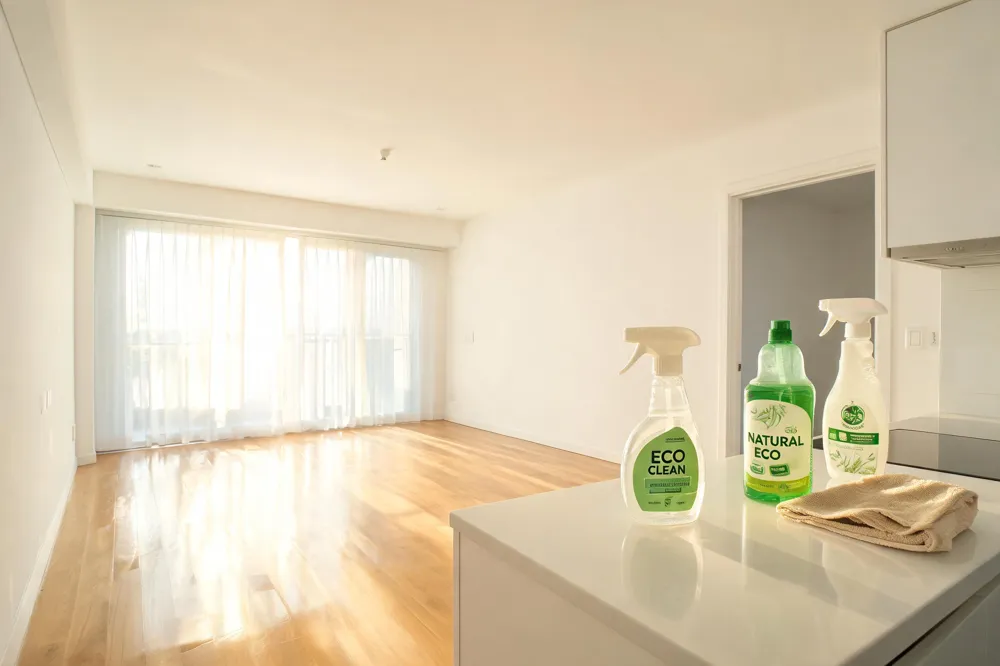
Sustainable maintenance practices prioritize long-term asset health while actively lowering resource consumption. By utilizing supplies that meet the Green Seal GS-42 standard, facility managers can effectively minimize chemical waste and ecological impact. The implementation of precision dilution control systems further ensures that concentrated solutions are applied efficiently, preventing the excessive use of materials and water.
Modern high-efficiency equipment, such as vacuum cleaners with HEPA filtration and CRI-rated machines, requires significantly less electricity compared to older models. Professional cleaning teams leverage these advanced tools to reach superior cleanliness without the energy spikes typical of legacy hardware. Low-moisture floor scrubbers also decrease water dependency, directly supporting broader sustainability goals.
Beyond immediate utility savings, reduced chemical usage and streamlined waste management are foundational for achieving rigorous certifications like LEED or WELL. Integrating these eco-friendly methods transforms building maintenance from a basic operational cost into a verifiable component of a property's overall environmental stewardship.
Outsourcing Cleaning as a Path to Energy Savings
Outsourcing janitorial tasks allows property managers to convert rigid, fixed labor overhead into flexible service contracts that align directly with actual building occupancy and real-time usage. While in-house staff often operate on static schedules regardless of facility needs, firms like Bravo Cleaning offer customized, adaptive schedules that ensure resources and utilities are only consumed during active facility hours.
Professional cleaning providers utilize specialized techniques and energy-efficient equipment designed to reduce the overall environmental footprint of a site. Advanced vacuums and cleaning machinery often consume less electricity than traditional models, while data-driven models help identify underutilized zones. By focusing on site-specific requirements rather than generic facility standards, these providers help eliminate waste that often goes undetected in standard commercial environments.
Integrating professional oversight serves as a strategic move to optimize energy management, similar to how large-scale platforms like HarvardSmart provide insights to improve operational accuracy. For many businesses, the Commercial Buildings Integration Program highlights the necessity of such efficiency gains, as roughly 30% of energy utilized in commercial structures is frequently wasted. Partnering with a professional service ensures that maintenance routines are not just clean, but optimized for the long-term sustainability and financial efficiency of the property.
Cleaning Schedules as an Energy Strategy
Flexible cleaning schedules represent a low-cost, high-impact strategy for reducing energy consumption in commercial buildings. By aligning cleaning tasks with actual building occupancy, property managers can reduce the hours that lights and HVAC systems operate unnecessarily. A study from the Commercial Buildings Integration Program at the U.S. Department of Energy notes that roughly 30% of the energy used in commercial buildings is wasted, presenting a significant opportunity for operational improvements.
Regular maintenance of HVAC systems, including filter changes and coil cleaning, further supports efficiency goals. Research published in Facilities Dive found that routine HVAC cleaning can improve fan and blower energy consumption by up to 60%. Pairing these practices with eco-friendly cleaning tools and products creates a comprehensive sustainability approach that lowers utility costs while extending equipment life.
Property managers looking to capture these savings should partner with a professional cleaning service that understands energy-conscious facility management. With over 20 years of local experience in Minneapolis, Bravo Cleaning offers customized plans that align service frequency with building usage. Contact Bravo Cleaning today to design a custom cleaning schedule that reduces your energy footprint and operating expenses.
Recent articles