Turn‑Over Cleaning Cost‑Benefit Analysis for Property Owners

Why Turnover Cleaning Matters
Turnover cleaning—also called make‑ready or move‑out cleaning—is the thorough deep‑cleaning of a rental unit between tenants. It removes dust, grime, odors, and hidden contaminants from kitchens, bathrooms, carpets, and hard‑to‑reach areas, leaving the space spotless for the next occupant. Financially, a fast, professional turnover can slash vacancy days by 1‑3 days, preserving up to $60 per empty day (e.g., a $1,800/month unit loses $60 daily). This translates into millions of dollars saved across a portfolio, especially when combined with reduced repair costs and lower security‑deposit disputes. Tenants who walk into a pristine unit report 20‑30 % higher satisfaction scores and are 1.8 × more likely to sign longer leases, directly boosting renewal rates. Consistent deep cleaning also extends the life of carpets, flooring, and fixtures, cutting replacement expenses by up to 15 % and preserving overall property value. In short, turnover cleaning is a cost‑effective, tenant‑centric strategy that protects revenue and enhances asset longevity.
Understanding Turnover Costs and the 1% & 2% Rules
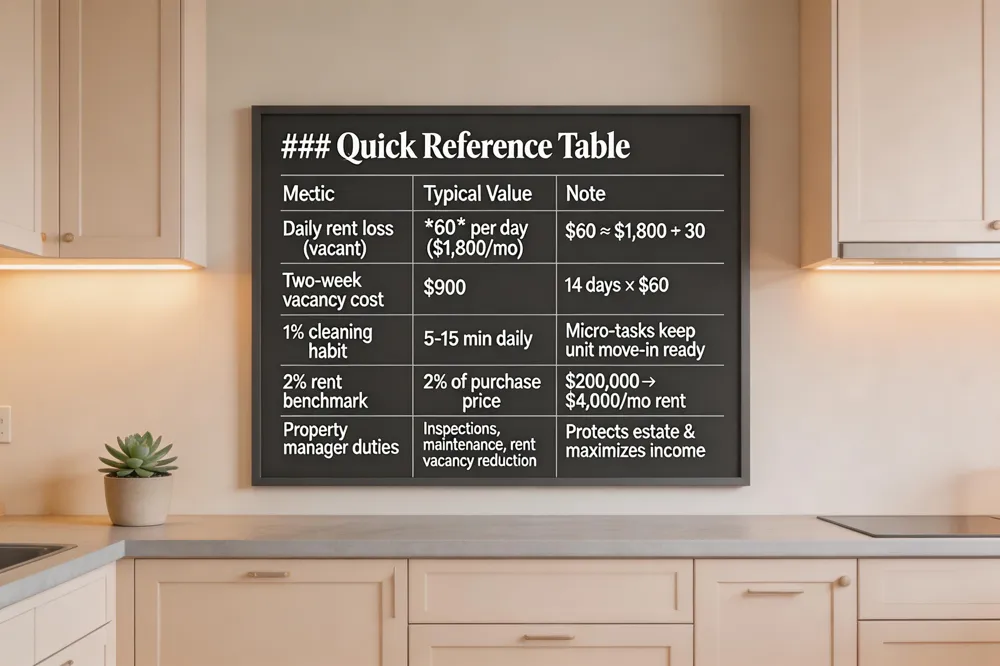 A vacant unit loses roughly $60 per day for a $1,800‑per‑month rent and two weeks of emptiness costs about $900 in lost rent. Turnover expenses also include utility transfers (≈$30 + $10 processing per utility), deep‑cleaning, paint touch‑ups, carpet replacement, and unexpected damages that can exceed $1,500. Security deposits often fall short, leaving owners to cover $1,000‑$2,000 in repairs.
1% cleaning habit – Spend about 1 % of your day (5‑15 minutes) on a focused task such as wiping a countertop or spot‑cleaning a high‑traffic area. Consistent micro‑cleaning prevents mess buildup, reduces decision fatigue, and keeps units move‑in ready without marathon sessions.
2% rent benchmark – A quick check rule states monthly rent should be roughly 2 % of the purchase price. If a property bought for $200,000 rents for $4,000/month, it meets the rule and is more likely to generate positive cash flow after taxes, insurance, and upkeep.
Property manager duties – Managers protect the estate by coordinating inspections, preventive maintenance, and timely repairs while maximizing income through efficient rent collection, vacancy reduction, and expense control.
FAQs
- What is the 1% rule of cleaning? It is a daily micro‑cleaning habit that allocates about 1 % of your time to a small cleaning task, keeping spaces consistently tidy.
- What is the 2% rule for properties? It is a screening guideline that rent should equal roughly 2 % of the property’s purchase price, indicating potential cash‑flow viability.
- Is a property manager responsible for protecting the condition of real estate and maximizing income? Yes; they safeguard the investment through upkeep and regulatory compliance while optimizing revenue by minimizing vacancies and controlling costs.
What Does Turnover Cleaning Mean and Why It Matters
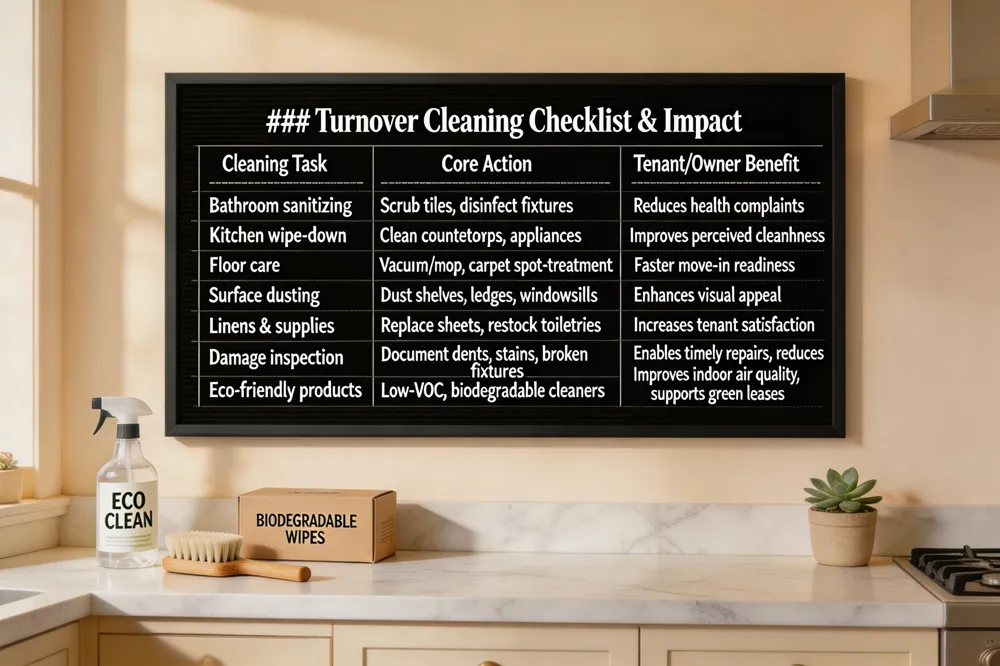 Turnover cleaning is the comprehensive cleaning and preparation of a property after one occupant moves out and before the next tenant or guest arrives. It involves sanitizing bathrooms, wiping down kitchens, vacuuming or mopping floors, dusting all surfaces, changing linens, and restocking essential supplies so the space feels fresh and ready for new occupants. The process also includes inspecting the unit for any damage or maintenance needs and reporting them promptly. By handling these tasks efficiently, turnover cleaning minimizes vacancy time and ensures a consistent, high‑quality experience for residents and visitors alike.
A thorough cleaning checklist—covering appliances, cabinets, HVAC coils, carpet care, and even hidden corners—creates a repeatable standard that reduces the risk of missed spots. When units are move‑in ready within 24‑48 hours, landlords can cut vacancy periods by 1‑3 days, translating into up to a 5 % increase in annual rental income. Tenants who walk into a spotless home report higher satisfaction scores, are 1.8 × more likely to sign longer leases, and generate fewer complaints.
Eco‑friendly practices, such as low‑VOC cleaners and biodegradable supplies, improve indoor air quality, lower allergen levels, and align with green‑building certifications that can justify premium rents.
Bravo Cleaning’s approach combines all these elements: a detailed, tech‑enabled checklist, rapid same‑day response, EPA‑approved green products, and a local team that knows regional regulations and tenant expectations. The result is a faster turnover, happier tenants, and a clearer bottom line for property owners.
Cost Breakdown: From Lost Rent to Deep‑Cleaning Expenses
 Understanding the true cost of a turnover helps landlords budget accurately and protect their bottom line.
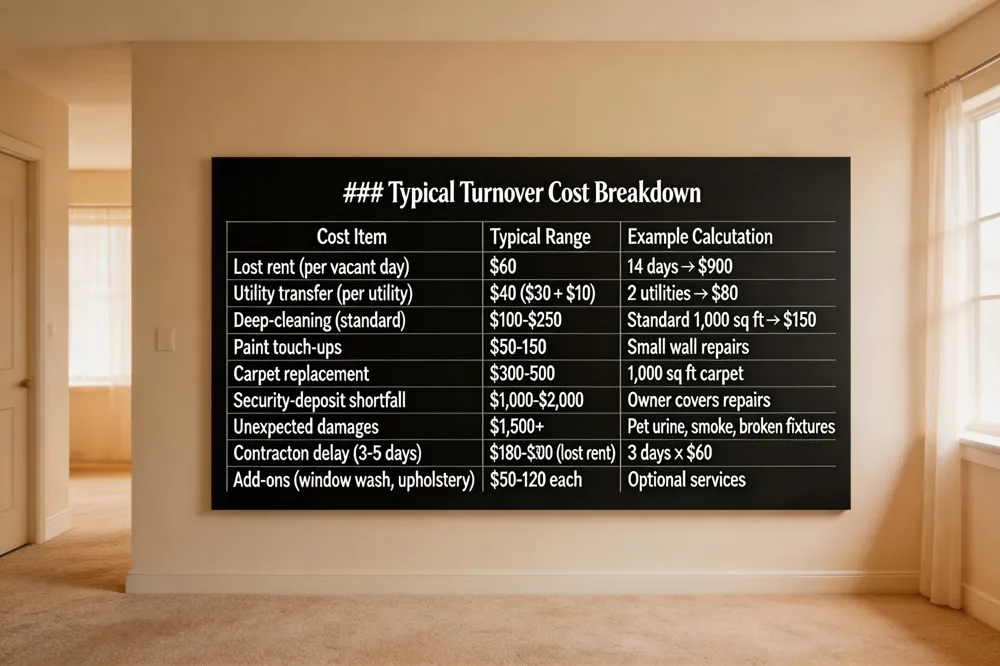
Daily rent loss – At A unit renting for $1,800 per month translates to approximately $60 of lost rent per vacant day (roughly $60 per vacant day). Two weeks of vacancy can cost a landlord $900 in lost rent, not including turnover expenses.
Utility transfer fees – Utility transfer costs are quoted at $30 per utility plus a $10 per‑bill processing fee, adding $40 per utility to the turnover tally.
Deep‑cleaning and cosmetic fixes – Deep cleaning, paint touch‑ups, and carpet replacement are typical turnover tasks that can add several hundred to over a thousand dollars in costs. Deep cleaning alone often ranges from $100‑$250, while carpet replacement may add $300‑$500 depending on square footage.
Security‑deposit shortfalls – Security deposits may be insufficient to cover full turnover expenses, often leaving owners to cover $1,000+ in additional repairs or cleaning.
Unexpected damages – Unexpected damages such as pet urine, smoke residue, or broken fixtures can cost $1,500 or more to remediate, underscoring the need for detailed move‑out inspections.
Contractor scheduling delays – Delays in approvals or contractor scheduling can extend turnover timelines by 3‑5 business days per delay, compounding lost rent.
How much to clean a 1,000 sq ft apartment? A professional turnover clean by Bravo Cleaning typically runs $100‑$200 for a standard clean. Deep or move‑out services can reach $250‑$350, with add‑ons (carpet shampooing, window washing, upholstery) costing $50‑$120 each. Request a free, eco‑friendly estimate tailored to your unit’s layout for the most accurate pricing.
Professional vs. In‑House Cleaning: Hidden Costs and Savings
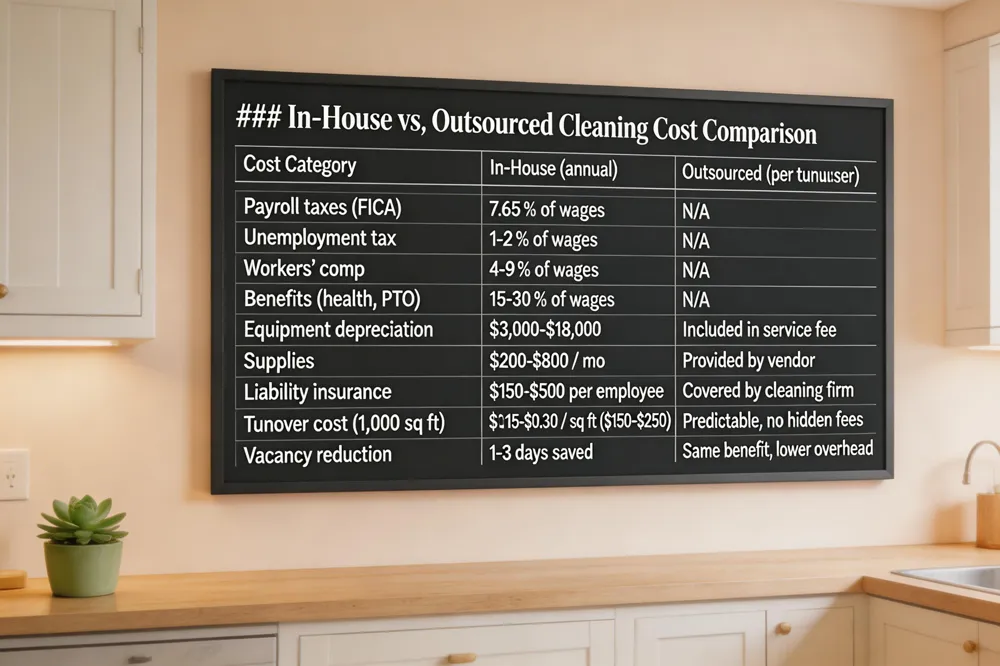 When a landlord compares an in‑house cleaning crew to a professional service, the hidden expenses quickly outweigh the apparent savings. In‑house teams cost 20‑40 % more than the headline payroll because employer payroll taxes (7.65 % FICA), unemployment taxes (1‑2 %), workers’ compensation (4‑9 %), benefits (15‑30 % of wages), paid‑time‑off (5‑8 %) and high turnover (200 % annual churn, $1,000‑$2,500 per hire) all add up. Equipment depreciation ($3,000‑$18,000 annually) and supply purchases ($200‑$800 per month) further erode margins, while the landlord must also carry liability insurance and manage compliance training ($150‑$500 per employee).
Outsourcing eliminates those hidden line items. Cleaning firms supply their own EPA‑approved, eco‑friendly products and commercial‑grade equipment, charging a predictable $0.15‑$0.30 per square foot (or $150‑$250 per one‑bedroom turnover). Their liability insurance protects the owner, and stable crews reduce service disruptions, leading to faster turnover—often cutting vacancy by 1‑3 days and boosting annual rental income by up to 5 %.
Tip question: A standard tip for a $500 house‑cleaning bill is roughly 15 %‑20 % ($75‑$100). Regular clients may stay near the lower end; a one‑time deep clean or exceptional service justifies the higher end. Adding a small flat amount ($5‑$10) for travel or supplies is also common. Cash or an online gratuity works equally well, reflecting satisfaction and effort.
Legal, Lease and Management Issues Around Cleaning Fees
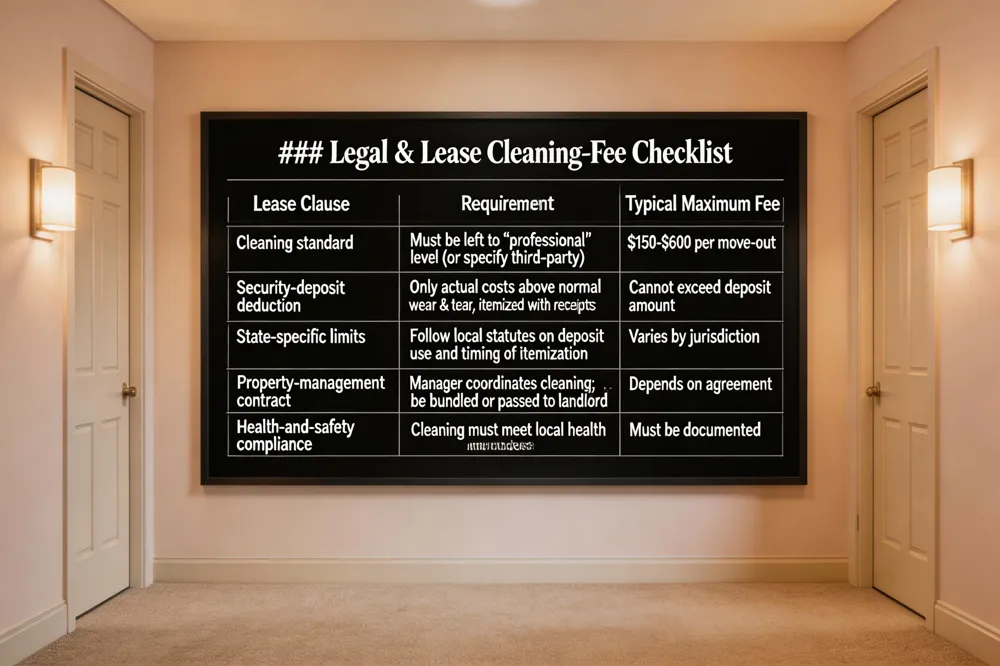 Understanding the legal framework of cleaning fees helps landlords avoid disputes and stay compliant. Tenant‑landlord cleaning clauses must be clear and specific; a lease can require the unit be left to a "professional" standard, but the tenant may meet that standard with their own effort unless the agreement explicitly mandates a third‑party service. Security‑deposit deductions are limited to actual costs above normal wear and tear; any cleaning charge deducted must be itemized, supported by receipts, and cannot exceed the deposit amount. Maximum permissible fees generally range from $150 to $600 per move‑out, reflecting the market rate for 25‑$30 per hour professional cleaners; some jurisdictions cap fees at the documented cost of restoring the unit to its pre‑tenant condition. Property‑management contracts typically assign coordination of cleaning to the manager while the landlord bears the direct cost unless the contract includes a bundled service fee. Finally, compliance with local regulations requires landlords to follow state‑specific limits on security‑deposit use, provide timely written itemizations, and ensure cleaning standards meet health‑and‑safety codes. By drafting transparent clauses, itemizing expenses, and adhering to regional rules, landlords protect their revenue while maintaining tenant goodwill.
Implementing Habit‑Building Rules: The 3:30 Rule for Owners
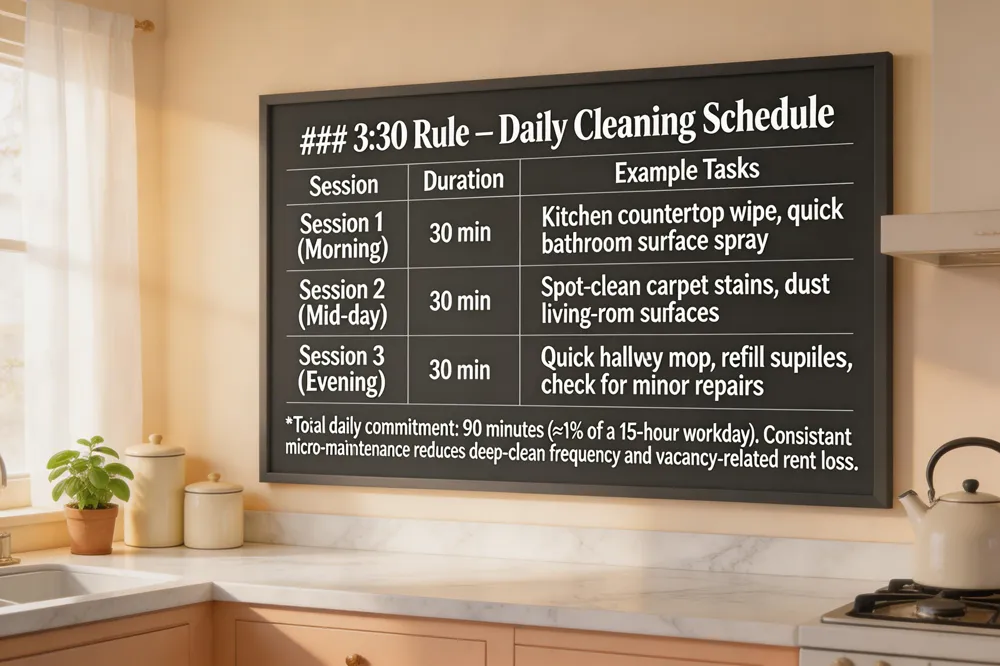 The 3:30 rule for cleaning is a simple time‑boxing technique that splits a day’s upkeep into three dedicated 30‑minute sessions. By allocating a half‑hour to tasks such as kitchen surface wipes, carpet spot‑treatment, or a quick bathroom sanitization, owners make steady progress without feeling overwhelmed. Consistency is key: a daily 90‑minute commitment prevents the buildup that forces costly deep‑cleaning cycles and reduces vacancy‑related lost rent. The rule integrates naturally with the 1 % rule—aiming to spend roughly 1 % of monthly rent on preventive upkeep—by turning a large, unpredictable expense into a predictable, low‑cost habit. Property owners who adopt this routine report smoother turnover transitions, fewer emergency repairs, and an overall boost in productivity, freeing time for core tasks like marketing and tenant relations.
Bottom Line: Investing in Turnover Cleaning Pays Off
Professional turnover cleaning delivers a clear ROI: owners recoup the $150‑$300 per unit cost through faster re‑letting and an average rent premium of 2‑5 %. Cleaner units attract higher‑quality tenants, boosting occupancy by 1‑3 days per turnover and increasing annual rental income by up to 10 % in competitive markets. Consistent deep‑cleaning preserves carpets, flooring, appliances, and HVAC components, extending their service life by 20‑30 % and slashing long‑term replacement expenses. Eco‑friendly products reduce indoor pollutants by up to 40 % and qualify properties for green‑building incentives, while locally‑based teams—such as Bravo Cleaning with 20 years of Minneapolis experience—ensure rapid response, compliance with regional regulations, and a personal touch that resonates with renters. In short, strategic turnover cleaning not only protects assets but also drives higher rents, lower vacancy, and sustainable growth.
Recent articles