The Importance of a Licensed Cleaning Company for Liability Protection


The Role of Licensing and Insurance in Modern Cleaning Services
Modern cleaning services operate under a clear set of industry standards that protect both providers and clients. General liability insurance—often a $1 million per‑occurrence minimum—covers bodily injury, property damage, and legal defense costs arising from slips, spills, or accidental breakage on a client’s premises. This liability shield is essential because a single claim can jeopardize a company’s finances and reputation. Licensing requirements vary by state but typically include a business license, a contractor’s or cleaning‑service license, and proof of workers’ compensation for any employees. Many jurisdictions also mandate compliance with OSHA and EPA regulations, encouraging eco‑friendly chemical handling that reduces hazardous exposure. Property managers and commercial clients routinely request a Certificate of Insurance and proof of licensing before signing contracts, using these documents to verify financial responsibility and regulatory compliance. By meeting these standards, cleaning firms demonstrate professionalism, lower risk, and the ability to deliver reliable, tailored cleaning solutions.
Understanding Liability Insurance Requirements for Cleaning Businesses
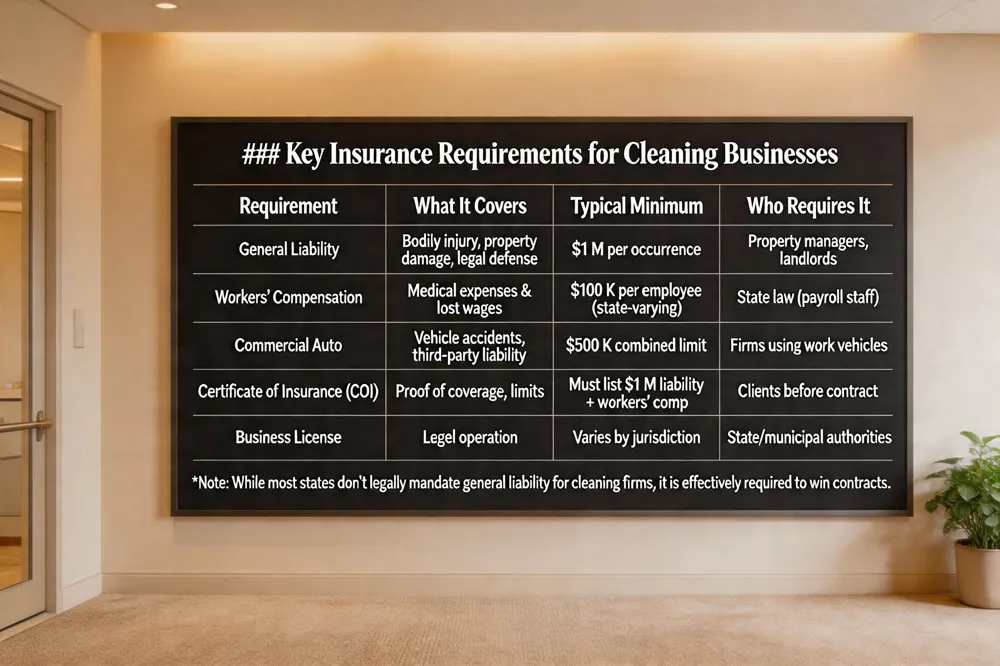 Cleaning firms operate in a high‑risk environment where a single slip‑and‑fall, a broken vase, or a chemical spill can generate costly lawsuits. General liability insurance is the backbone of protection: it covers third‑party bodily injury, property damage, and legal defense costs. While most states do not mandate general liability for cleaning businesses, property managers, homeowners’ associations, and commercial landlords almost universally require a Certificate of Insurance before a contract is signed. In practice, the demand for liability coverage far outweighs the legal minimum, making it a de‑facto prerequisite for winning work.
State requirements vary. Many jurisdictions—such as Minnesota, New Jersey, and Ohio—require a business license and workers’ compensation for any employee on the payroll. Workers’ compensation shields both the employee and the client from medical expenses and lost wages if an injury occurs on the job. For firms that transport supplies or staff, commercial auto insurance is essential to cover vehicle accidents and associated third‑party claims.
Do I need liability insurance for a cleaning business?
Most states don’t legally require it, but without it is virtually impossible to secure contracts. Liability insurance protects your reputation, covers property damage and slip‑and‑fall injuries, and signals professionalism to prospects.
What insurance do I need as a cleaner?
At a minimum, general liability. Add workers’ compensation if you have staff, commercial auto for work vehicles, and consider bonding or tools coverage for larger contracts.
Does a cleaner have to be insured?
Not always legally mandatory, but insurers and clients expect coverage. Operating without it leaves a single claim capable of bankrupting the business and eroding client trust.
Maintaining up‑to‑date insurance, combined with eco‑friendly practices and rigorous staff training, reinforces a cleaning company’s credibility, reduces liability risk, and ensures uninterrupted service for residential and commercial clients.
Licensing, Bonding, and Their Role in Liability Protection
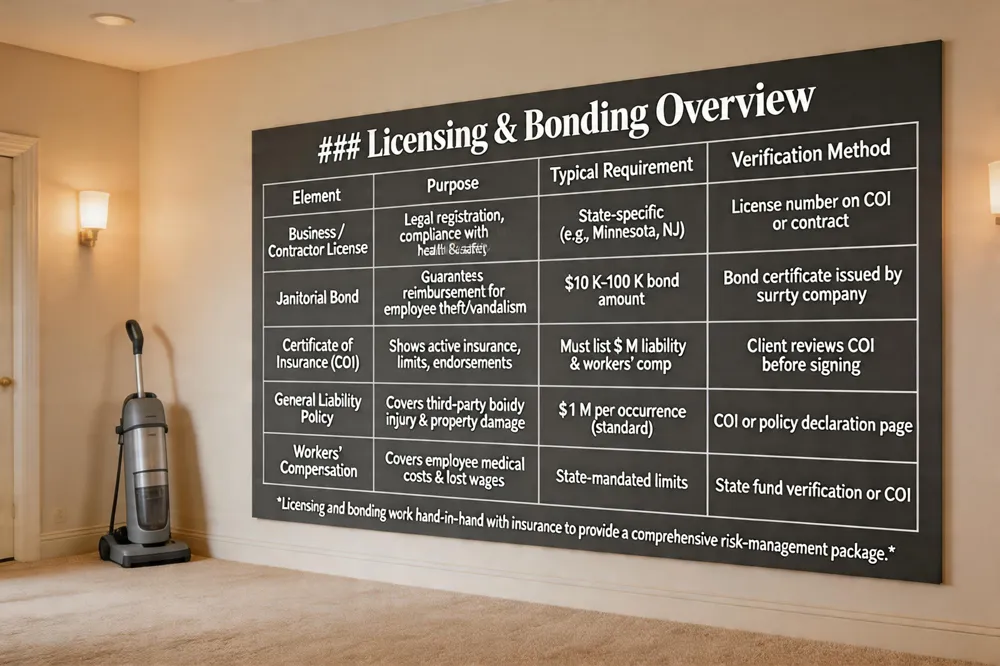 A licensed cleaning company signals that it has been vetted by state or local authorities, follows approved chemical‑handling procedures, and maintains a record of compliance. This registration is often tied to other safeguards—most notably general liability insurance and workers’ compensation—providing a financial safety net for property‑damage or bodily‑injury claims.
Property managers frequently request a janitorial bond as an added layer of protection. A bond (typically $10,000‑$100,000) guarantees that the client will be reimbursed for theft, vandalism, or other misconduct by employees. The bonding process involves a credit check and a premium, after which a bond certificate is issued.
Clients verify coverage through a Certificate of Insurance (COI). The COI lists policy limits, effective dates, and any additional insured endorsements, allowing the client to confirm that the cleaning contractor carries the required $1 million per‑occurrence liability limits and workers’ comp coverage.
Do cleaners need to be licensed and insured? Yes—Minnesota law and most commercial contracts require both a valid business/contractor license and general liability plus workers’ compensation insurance.
What does it mean when a cleaning company is licensed? It means the firm is officially registered, complies with health‑and‑safety regulations, and is accountable to licensing boards, often linking to required insurance and bonding.
How to get bonded and insured for a cleaning service? Identify local licensing requirements, assess risk exposure, obtain quotes for general liability, workers’ comp, and a janitorial bond (often bundled by insurers like Insureon), complete the application, pay premiums, and retain the COI and bond certificate for client verification.
Insurance Options for Self‑Employed Cleaners
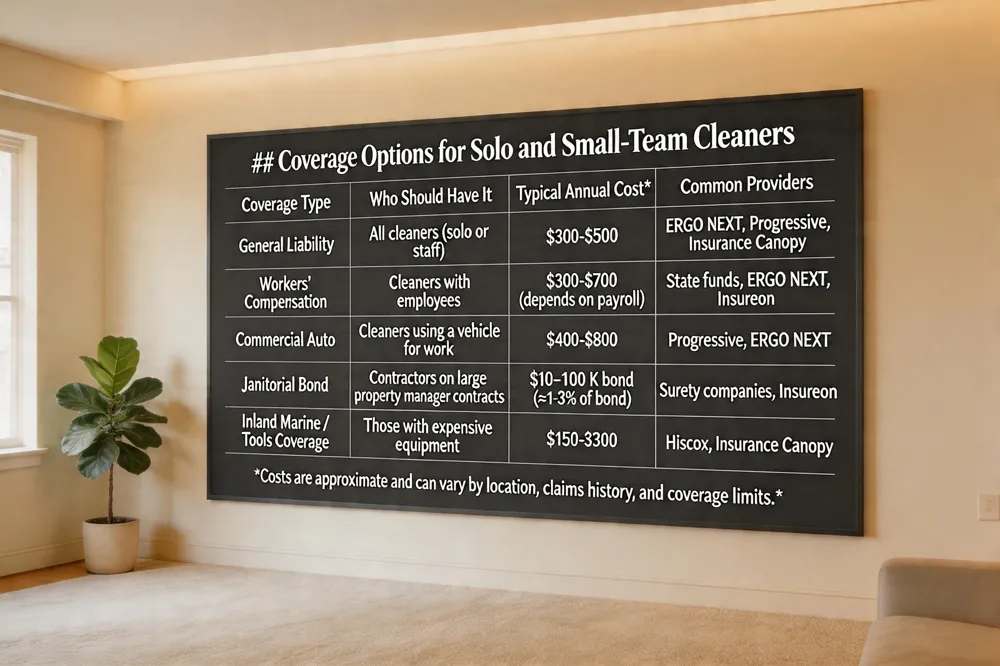 General liability for solo operators Self‑employed cleaners should carry a General Liability policy to protect against bodily‑injury, property‑damage, and personal‑injury claims that can arise while working on a client’s premises. This coverage is often the minimum requirement for contracts and demonstrates professionalism.
Workers’ compensation when hiring staff If you add employees, most states require Workers’ Compensation insurance. It covers medical expenses, lost wages, and legal costs if a worker is injured on the job, shielding both you and your staff from costly lawsuits.
Commercial auto coverage Personal auto policies typically exclude work‑related accidents. A Commercial Auto policy protects your vehicle and third‑party liability when you transport equipment or travel between sites.
Bonding and equipment protection A janitorial bond reassures clients you you can financially compensate for employee theft. Inland marine or tools‑coverage policies replace or repair stolen or damaged cleaning equipment, keeping operations running smoothly.
Cheapest policy options The most affordable start is a basic General Liability plan, often priced at $300‑$500 annually. Bundling Workers’ Compensation or Commercial Auto can add $300‑$700, still remaining cost‑effective. Online carriers such as ERGO NEXT, Progressive, and Insurance Canopy offer small‑business packages or Business Owner’s Policies that combine coverages with 10‑25 % discounts. To lower premiums, request multiple quotes, maintain a clean claims history, limit staff numbers, and ask about multi‑policy or annual‑payment discounts.
Financial Impact of Liability Coverage and Cost Overview
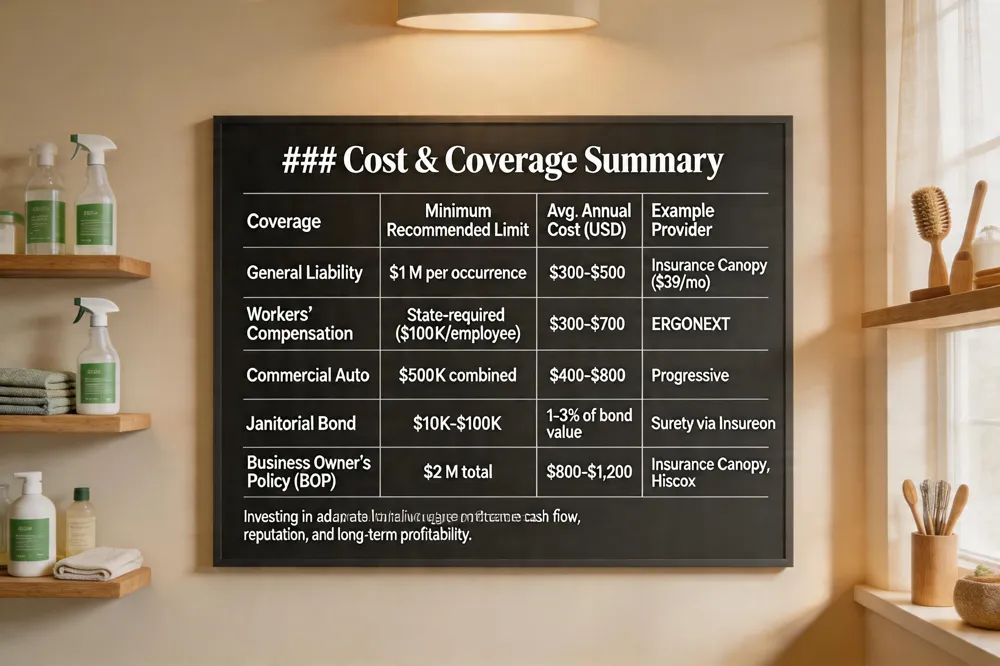 Why liability protection matters – It shields the business from lawsuits, covering medical bills, legal defense, and settlements that could otherwise force a company into bankruptcy. Without it, a single slip‑and‑fall or equipment‑damage claim can jeopardize cash flow and reputation.
Best options – In Minneapolis, Insurance Canopy provides low‑cost, cleaning‑specific policies starting at $39 per month with $2 million limits. NEXT (ERGO NEXT) offers quick online quotes and up to 25 % discounts, while Progressive excels at bundled auto‑business packages. Thimble serves part‑time cleaners needing month‑to‑month coverage, and Hiscox delivers global protection for larger firms.
Securing adequate liability coverage not only meets client contract requirements but also ensures long‑term financial stability for the cleaning business.
Why Hiring a Professional, Licensed Cleaning Service Pays Off
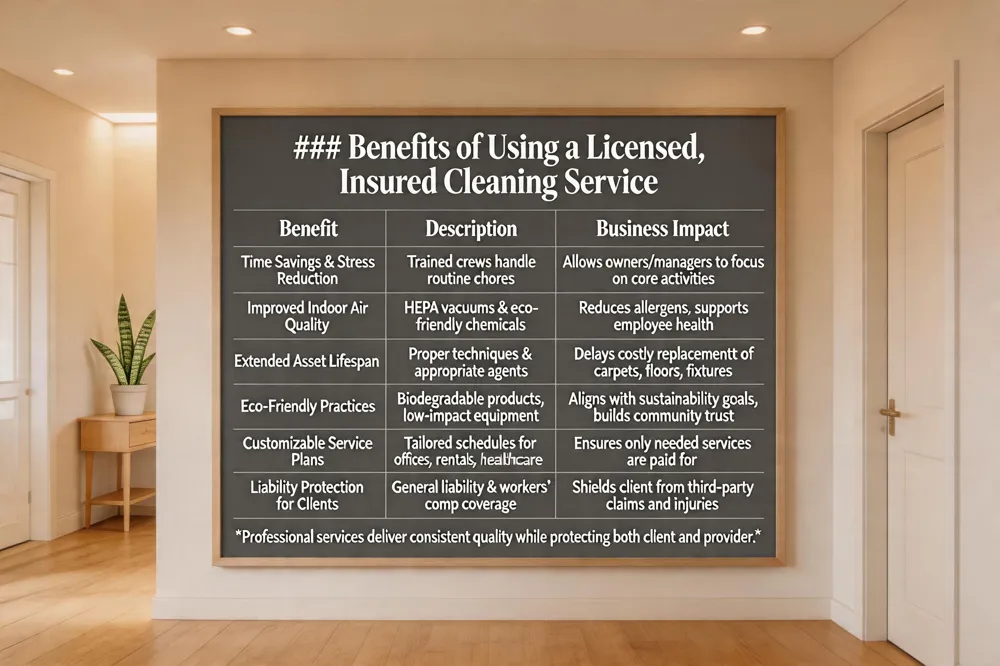 A licensed cleaning company does more than tidy a space—it delivers measurable business value.
Time savings and stress reduction – Trained crews handle routine dusting, vacuuming, and floor care, freeing owners and managers to focus on core activities. The mental load of daily chores disappears, and weekends stay weekend‑free.
Improved indoor air quality and health – Professional teams use HEPA‑rated vacuums and eco‑friendly chemicals that capture allergens, pet dander, and airborne pollutants. Regular deep cleaning of carpets, upholstery, and HVAC ducts reduces respiratory irritants and supports a healthier environment for employees and residents.
Extended lifespan of carpets, floors and fixtures – Proper technique and appropriate cleaning agents prevent premature wear, staining, and chemical damage. By preserving the integrity of flooring, carpets, and high‑traffic fixtures, clients avoid costly replacements and maintain property value.
Eco‑friendly practices and community trust – Companies like Bravo Cleaning prioritize EPA‑approved, biodegradable products and low‑impact equipment. This reduces hazardous exposure, aligns with local sustainability goals, and builds goodwill among neighbors and property managers.
Customizable service plans – Whether a weekly office maintenance schedule, a deep‑clean turnover for rentals, or a specialized sanitation protocol for healthcare facilities, licensed providers tailor contracts to exact client needs, adding only the services required.
Why hire a cleaning service? A professional service delivers consistently spotless results, protects health, extends asset life, and supports community trust—all while saving time and reducing stress.
Benefits of house cleaning services – Cleaner air, more free time, longer‑lasting floors, personalized schedules, and a stress‑free home environment.
What are professional cleaning services? Systematic, trained‑staff solutions that cover routine upkeep and intensive deep‑cleaning, using industry‑standard, eco‑friendly tools to meet high quality standards.
What are the benefits of hiring professional cleaners? Expertise, reliability, eco‑friendly products, and comprehensive liability coverage that shields both client and provider.
Choosing a Licensed, Insured Cleaner Protects Everyone
Liability insurance and proper licensing are the backbone of a trustworthy cleaning business. General liability coverage shields both the contractor and the client from costly claims for bodily injury, property damage, or advertising injury that can arise during a service visit. Workers’ compensation protects employees and prevents the client from being held financially responsible for on‑the‑job injuries. State and local licensing ensures compliance with OSHA, EPA, and safety standards, reducing the chance of accidents and chemical spills. Before signing any contract, request a Certificate of Insurance (COI) and verify the company’s licensing status through state databases; this simple step confirms that the provider meets the minimum $1 million per‑occurrence limits most commercial managers require.
Ready for peace of mind? Bravo Cleaning combines a 20‑year track record, eco‑friendly practices, and fully insured, licensed crews. Contact us today for a free quote and proof of coverage – the smart choice for property managers who value safety, reliability, and community‑focused service.
Recent articles