10 Benefits of Hiring a Licensed & Insured Cleaning Company for Your Property


Introduction: Setting the Stage
When a property manager or business owner contracts a cleaning service, the most critical first step is confirming that the provider is both licensed and insured. A valid business license proves the company meets state‑ and local‑mandated training, safety, and ethical standards, while liability and workers’ compensation insurance shields the client from costly repairs, medical bills, or lawsuits caused by accidental damage or employee injuries. This dual protection not only reduces financial risk but also ensures that cleaners follow OSHA, EPA, and industry best‑practice protocols, delivering consistent, high‑quality results. Throughout this article we will explore how licensing guarantees vetted, background‑checked staff, how insurance offers peace of mind and financial security, and how these safeguards enable flexible, eco‑friendly cleaning solutions tailored to each property’s unique needs. Real‑world case studies from local firms such as Bravo Cleaning illustrate the tangible benefits of choosing a licensed, insured partner for long‑term property stewardship.
Financial Transparency and Fair Pricing

When evaluating a cleaning provider, clear, upfront pricing is essential for both residential and commercial clients.
• Hourly rates for residential cleaning – In the U.S. market rates typically range from $35 to $75 per hour per cleaner, depending on experience, location, and whether supplies are included. In Minneapolis, Bravo Cleaning quotes most basic residential jobs at $35‑$45 per hour for a single worker.
• Is $30 an hour a good rate for cleaning services? – $30 per hour sits at the low‑mid end of the market. It can be a fair rate for straightforward, low‑maintenance cleanings or for new independent contractors seeking to attract business. However, when services include deep‑cleaning, carpet care, or eco‑friendly products—features Bravo emphasizes—the hourly rate may need to be higher to cover labor, insurance, and overhead. For turnover or move‑in/move‑out jobs that require two workers, $30 per hour per worker remains competitive, especially when bundled into a flat‑rate quote.
• Cost considerations for deep‑cleaning and specialty services – Deep‑cleaning, upholstery care, and specialized disinfection typically involve additional labor, specialized equipment, and higher‑grade cleaning agents, which raise the per‑hour cost or result in a flat‑rate package. Transparent contracts outline these variables, ensuring clients know exactly what they are paying for and why.
• Why hire a professional cleaning company? – Professional cleaners bring vetted, trained staff, EPA‑approved low‑VOC products, and comprehensive liability and workers’ compensation insurance. This reduces risk, improves indoor air quality, and frees property managers to focus on core business activities while enjoying consistent, high‑quality results.
Insurance Explained and Its Protective Power
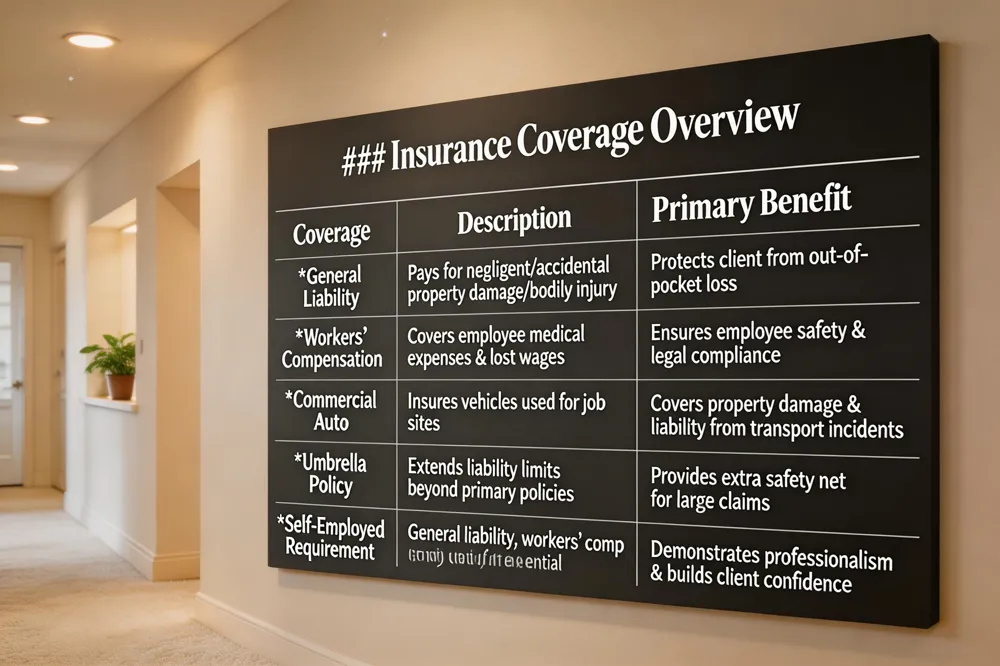 Insurance for cleaning firms is a set of policies that shield both the service provider and the client from financial loss due to accidents, property damage, or injuries. The core coverage includes general liability, which pays for claims arising from negligent or accidental damage, and workers’ compensation, which covers medical expenses and lost wages if an employee is hurt on the job. Many reputable cleaners also carry commercial auto insurance to protect vehicles used for job sites, and an umbrella policy that extends liability limits beyond the primary policies, providing an extra safety net.
What does it mean when a cleaning company is insured? It means the company has purchased these protections, ensuring any mishaps are handled financially and legally rather than leaving the client to chase compensation.
Do self‑employed cleaners need insurance? Yes—general liability, workers’ compensation (if they have staff), and commercial auto are essential for professionalism and client confidence.
Does a cleaner need to be insured? While not always legally required, insurance is a best‑practice standard that protects both parties from costly claims.
Regional Benefits and Local Compliance
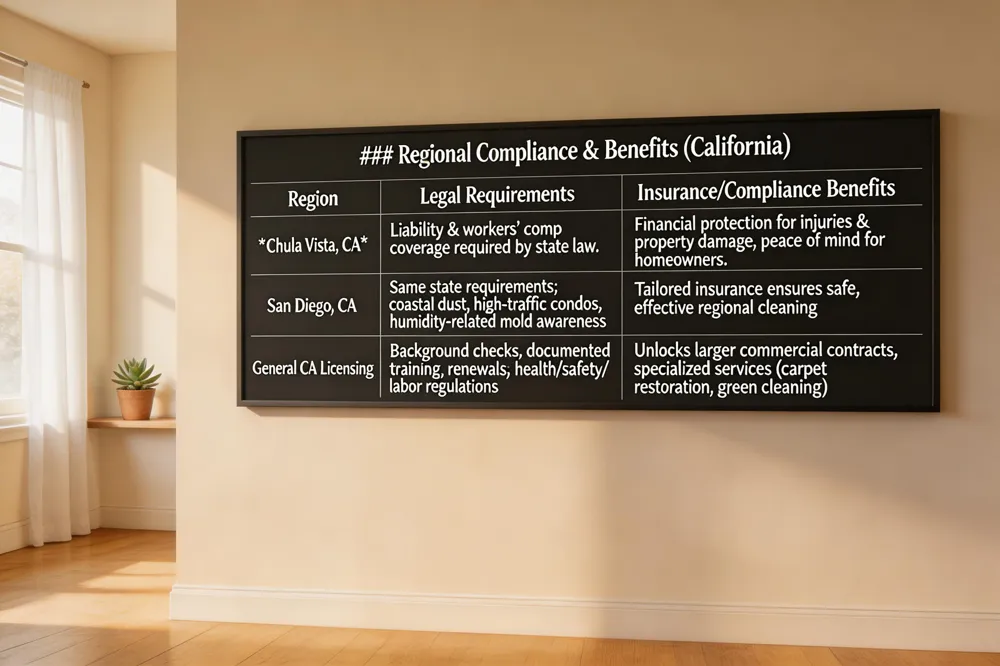 Hiring an insured cleaning service near Chula Vista, CA protects you from financial loss if a worker is injured or property damage occurs, as California law requires liability and workers’ compensation coverage. The insurer covers repair costs and medical bills, giving you peace of mind while the vetted crew follows OSHA safety standards and uses EPA‑approved, low‑VOC products that improve indoor air quality. The same insurance mandates apply in San Diego, where local insurers understand coastal dust, high‑traffic condos, and humidity‑related mold, ensuring safe, effective cleaning tailored to regional challenges. A licensed cleaning company in California further guarantees compliance with state health, safety, and labor regulations, requiring background checks, documented training, and regular renewals. Licensing also unlocks access to larger commercial contracts and specialized services such as carpet restoration and green cleaning. Together, licensing and insurance provide legal protection, financial security, and reliable, high‑quality service for homeowners and businesses alike.
Bonding, Certifications, and Business Requirements
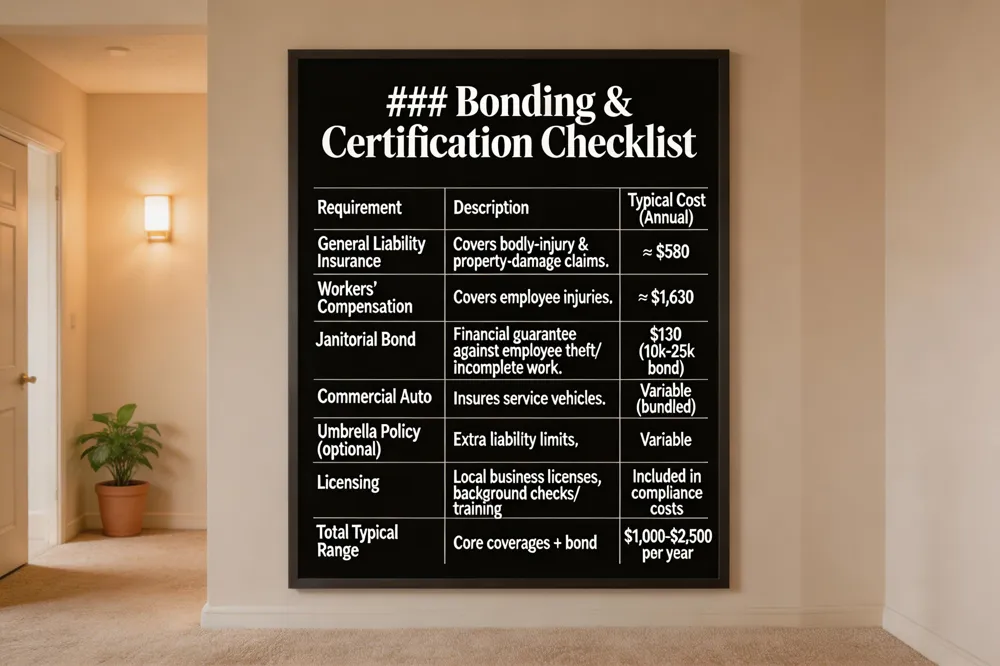 Should house cleaners be bonded and insured? Yes—bonded cleaners provide a financial guarantee that the work will be completed as promised, while insurance shields homeowners from liability for accidental damage, theft, or personal injury. This dual protection demonstrates that the staff has been vetted and the business takes responsibility for its actions, giving peace of mind.
What insurance does a cleaning business need? A reputable cleaning firm carries general liability insurance for bodily‑injury and property‑damage claims, workers’ compensation for employee injuries, commercial auto coverage for vehicles, and often a business‑owner’s policy that bundles liability with property protection. Many clients also require a janitorial bond to guard against employee theft, and an umbrella policy can add extra limits for larger claims.
How can a cleaning service become bonded and insured? First, obtain all required local business licenses. Then, work with an insurance broker to purchase core policies (general liability, workers’ compensation, auto) and secure a janitorial bond through a reputable bonding company. Keep all documentation ready for client contracts and licensing renewals.
How much does it cost? Typical annual costs range from $1,000 to $2,500, including general liability (~$580), workers’ compensation (~$1,630), a $10,000‑$25,000 janitorial bond (~$130), and optional coverages such as commercial auto or an umbrella policy. These expenses ensure full financial protection and credibility for both residential and commercial clients.
Service Quality, Efficiency, and Health Benefits
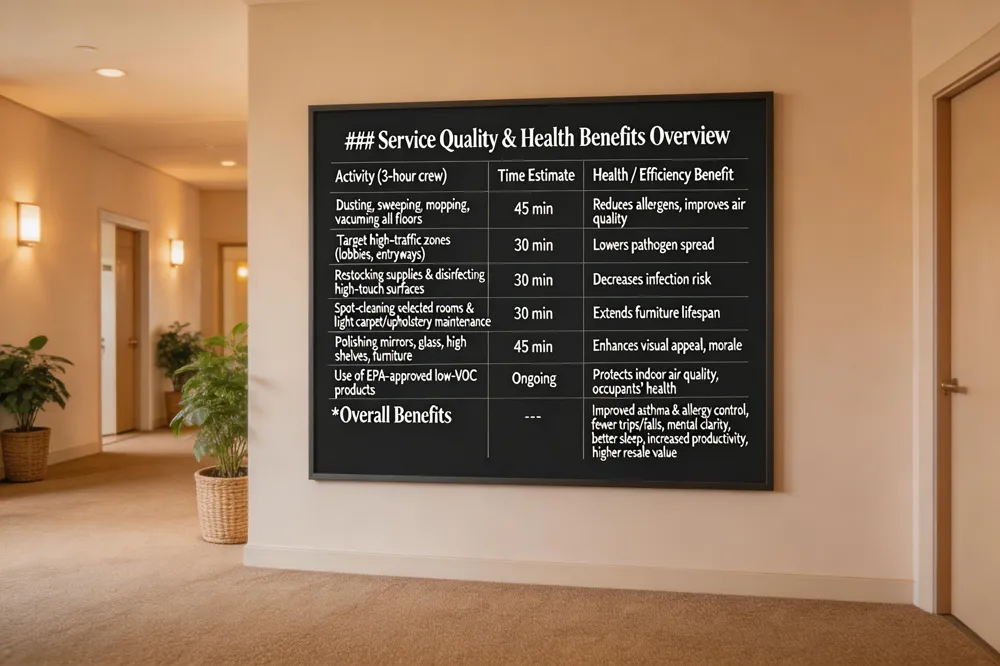 A professional cleaning crew can accomplish a remarkable amount in just three hours. They will dust, sweep, mop and vacuum every floor, target high‑traffic zones such as lobbies and entryways, restock supplies, disinfect high‑touch surfaces (doorknobs, handrails), spot‑clean selected rooms, and perform light carpet and upholstery maintenance. Mirrors, glass, high shelves and furniture are polished for a polished finish, all using EPA‑approved, low‑VOC products that protect indoor air quality.
Maintaining a clean, organized home yields ten clear benefits: reduced allergens and asthma triggers, lower food‑borne illness risk, fewer trips and falls, enhanced mental clarity and stress relief, a welcoming atmosphere for guests, increased productivity, better sleep, preserved furniture lifespan, gentle physical activity, and higher property resale value.
The 3‑30 cleaning rule helps busy owners stay on top of upkeep. Break housekeeping into three 30‑minute sessions—morning, midday, evening—to tackle tasks like wiping countertops, vacuuming a room, or tidying a bathroom. This habit prevents clutter buildup, supports consistent hygiene, and makes larger deep‑cleans easier.
Eco‑friendly practices—using biodegradable detergents, HEPA‑filter vacuums, and low‑VOC disinfectants—not only meet OSHA and EPA standards but also improve indoor air quality, protecting occupants’ health while delivering professional results.
Conclusion: The Bottom Line
Recap of the ten key benefits: A licensed and insured cleaning partner guarantees compliance, liability protection, workers’ compensation, background‑checked staff, equipment, eco‑friendly products, consistent quality, preventive maintenance, transparent contracts, and trust. Why Bravo Cleaning stands out: With over 20 years in Minneapolis, Bravo holds all required licenses, liability and workers’ compensation insurance, and bonding. Their team follows OSHA and EPA standards, uses HEPA‑filtered vacuums, offers customizable schedules, and responds quickly to service issues. Clients cite peace of mind, healthier indoor air, and extended asset life. Final encouragement: Property owners should choose a vetted, insured provider like Bravo to safeguard investments and enjoy cleaning.
Recent articles