Licensed and Insured Cleaning Providers: What to Verify Before Signing


Why Verification Matters
Verifying a cleaning provider’s credentials is not just a paperwork step; it is a cornerstone of responsible property management. Legal compliance is ensured when a contractor holds a current business license, a Certificate of Insurance that lists the client as an additional insured, and workers’ compensation coverage that protects both the employee and the property owner. This documentation reduces financial risk, shielding owners from unexpected costs arising from property damage, bodily injury, or theft. When a vendor’s insurance, bonding, and background‑check processes are verified, service quality improves because trained, vetted crews follow safety protocols and use approved eco‑friendly products. Ultimately, a thorough verification process gives managers peace of mind, knowing that every cleaning engagement is backed by standards and protection.
Licensing, Insurance & Bonding Basics

In the United States, a cleaning business must first obtain the appropriate state or local business license before it can operate legally. Licensing requirements vary—most jurisdictions demand a general business license, while some cities (e.g., Washington, D.C.) and states (e.g., Minnesota) also require a specific cleaning‑contractor permit for services such as carpet care or post‑construction cleanup. The license confirms compliance with health, safety and zoning regulations and is the first gate‑keeper for insurance eligibility.
General liability limits – The industry standard is $1 million per occurrence and $2 million aggregate, though many commercial clients ask for higher limits. This coverage protects the client from property damage or third‑party bodily injury caused by the cleaning crew.
Workers’ compensation – Mandatory in every state for employers, it covers medical expenses and lost wages if a cleaner is injured on the client’s premises. It also shields the client from liability for those injuries.
Surety bonding – A janitorial bond provides an additional financial guarantee against theft or dishonest acts. Property managers and condominium boards frequently require a bond as a safeguard beyond insurance.
How licensing influences insurance needs – A valid license often triggers higher insurance requirements; for example, a commercial cleaning license may necessitate larger liability limits and specific endorsements for high‑risk tasks (hazardous chemicals, high‑rise windows, etc.).
FAQ
- Do cleaners need to be licensed and insured? Yes—most U.S. jurisdictions require a business license, and reputable firms carry general liability and workers’ compensation coverage. Specialized work may also need a commercial cleaning license and a janitorial bond.
- What certificates do I need for cleaning? Industry‑recognized credentials such as IICRC carpet cleaning, OSHA 10‑hour safety, and Green Cleaning certifications are common. A local business license is also required.
- What does it mean when a cleaning company is licensed and insured? Licensed means the company is authorized to operate; insured means it has financial protection against damage or injury claims, demonstrating regulatory compliance and risk mitigation.
- Is $30 an hour good for cleaning? In Minneapolis, $30 / hour is competitive—well within the typical $25‑$45 range for residential work and below the higher $35‑$75 market ceiling, ensuring fair compensation while controlling budget.
Insurance Verification: Cheat Sheet & Practical Steps

Certificate of Liability Insurance (COI) – Request a current COI and confirm it lists the policy number, carrier, coverage limits (typically $1 million per occurrence, $2 million aggregate), and the named insured that matches the contractor’s legal name on the W‑9. Verify the effective and expiration dates cover the contract period and that the client is named as an additional insured when required.
Workers’ Compensation Proof – Obtain a workers’ comp certificate showing coverage for all employees. The document must state the insurer, policy number, limits, and dates. Ensure the policy complies with state minimums (e.g., $10,000 per employee in Minnesota) and that the insurer is licensed in the state where services are performed.
Bonding Documentation – If the provider claims to be bonded, ask for the bond certificate or surety bond number. Confirm the bond amount (often $10,000–$50,000) and that the bonding company is reputable. This protects against theft or dishonest acts.
Policy Expiration Tracking – Record each document’s expiration date in a centralized system. Set automatic renewal reminders 30 days before expiry to avoid coverage gaps. Log the verification date, insurer contact, and any endorsements.
Online Verification Portals – Many carriers offer web portals where you can input the policy number to confirm active status and limits. Additionally, state licensing databases (e.g., Minnesota Department of Labor and Industry) can validate business licenses and, in some cases, insurance information.
Insurance verification cheat sheet – Compile the three essential documents—COI, workers’ comp certificate, bond certificate—check name and policy matches, confirm coverage limits, and record verification details for audits.
How to verify a certificate of liability insurance – Cross‑check the COI against the contractor’s name, ensure coverage dates align with the project, and contact the insurer directly via the listed producer to confirm the policy is active.
Insured cleaning service verification online – Use the insurer’s online verification tool or state licensing portal to validate the policy number and coverage status.
Insured cleaning service verification near me – Search reputable directories (BBB, local business registries), request the COI, and call the carrier’s verification hotline.
Can you check if a company has insurance? – Yes—request the COI, verify details with the issuing carrier, and cross‑check the insurer’s licensing through your state’s department of insurance or NAIC consumer tools.
IICRC Certification: What It Means for You

An IICRC Certified Firm is a business that employs one or more technicians who have earned IICRC certifications in inspection, cleaning, or restoration. This designation guarantees adherence to industry‑wide best practices, proven methods, and strict safety and ethical standards. For customers, hiring a certified firm provides confidence that the work will be done correctly the first time, whether it’s residential carpet cleaning, commercial turnover services, or upholstery restoration.
Benefits of hiring certified technicians – Certified technicians have completed rigorous training and passed comprehensive exams, ensuring expertise in carpet, upholstery, and floor‑care cleaning. Their work meets globally recognized standards, reducing the risk of re‑work and protecting clients from liability.
How to become an IICRC Certified Firm – Create or log into an IICRC account, navigate to the “Certified Firm Application,” list at least one certified technician, provide proof of general liability insurance, pay the $25 fee, and submit required documentation. IICRC will then verify eligibility.
IICRC Global Locator & lookup – Use the IICRC website’s Global Locator to find certified firms near you. Enter a city, zip code, or distance radius; the tool filters for companies with active certified technicians. You can also verify a specific certification by searching the company name, technician name, or certification number.
Finding local IICRC‑certified companies – The locator displays only firms that meet the organization’s training and ethical criteria, making it easy for property managers and business clients to select qualified providers in their area.
Hiring Your First Cleaner: A Step‑by‑Step Checklist

Defining Service Scope – Begin by outlining exactly what you need: a one‑time deep reset, a move‑in/out job, or a recurring maintenance schedule. Specify rooms, frequency, any specialty tasks (carpet care, post‑construction cleanup) and whether you require eco‑friendly products. This clarity helps match the right provider to your home’s condition and budget.
Interviewing Candidates – Talk to several cleaners or companies. Ask for a Certificate of Insurance (COI) that lists policy limits (minimum $1 M per occurrence, $2 M aggregate), effective dates, and the named insured. Verify that the insurer’s agent can confirm the policy is active. Request proof of a valid business license and bonding, and confirm the client will be listed as an additional insured.
Background Checks & References – Reputable providers conduct criminal‑history, sex‑offender, and employment‑verification checks on all staff. Ask for a summary of these screenings and for at least two recent client references. A quick call to those references can reveal reliability and professionalism.
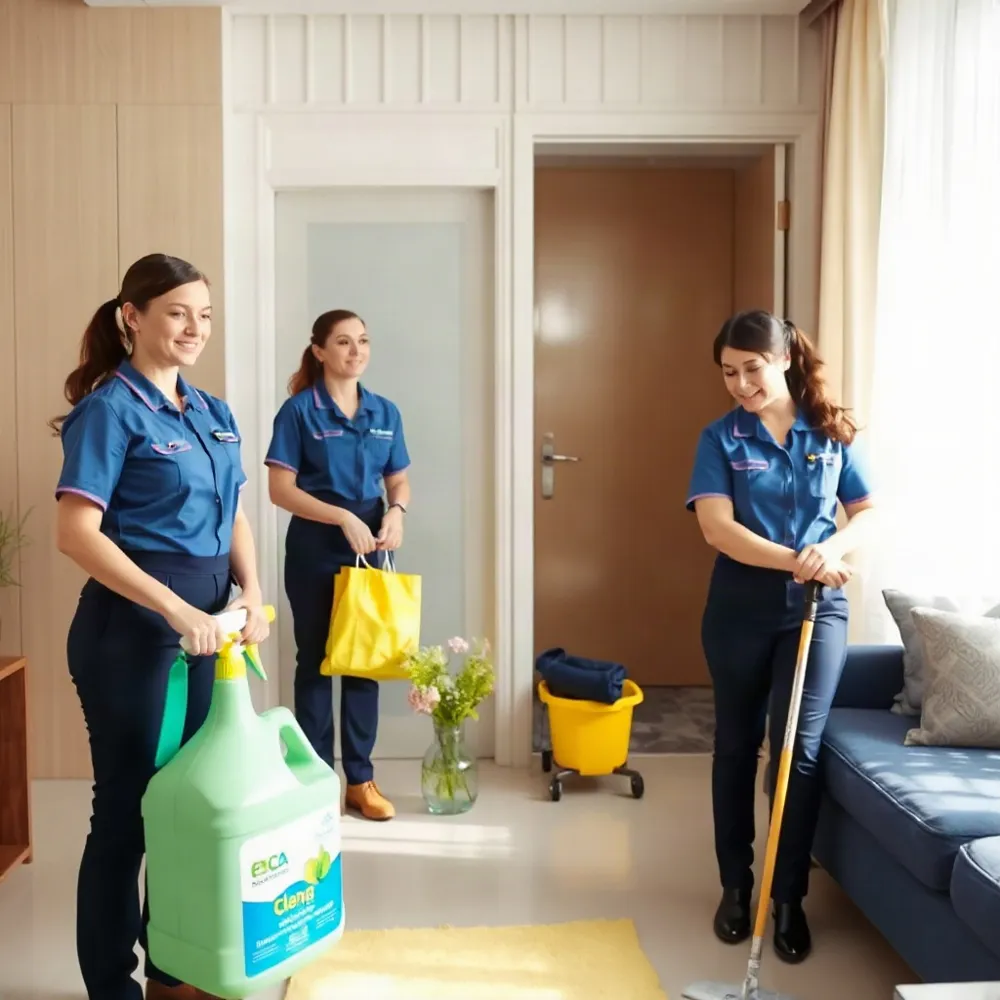
Trial Clean Evaluation – Schedule a short trial clean. Use a room‑by‑room checklist (kitchen countertops, bathroom fixtures, bedroom floors, living‑area upholstery). Observe the use of proper equipment, eco‑friendly solutions, and attention to high‑touch points. Document any gaps before moving to a full contract.
Written Agreements – Draft a service agreement that references the license number, insurance details, bonding amount, scope of work, pricing, and a clause naming you as an additional insured. Include renewal reminders for insurance expirations to avoid coverage gaps.
By following this structured vetting process, property managers and business clients can confidently hire a qualified, insured, and environmentally responsible cleaner.
Ongoing Quality Assurance & Verification Activities

Effective quality assurance begins with pre‑operation checks that confirm the correct cleaning protocol, chemical concentration, temperature, and equipment settings before work starts. A visual line‑clearance inspection follows, spotting any obvious residues or debris.
Analytical testing—such as ATP swabs, pH meters, and residue analyses—provides quantitative evidence that microbial load, chemical carry‑over, or allergens are below defined acceptance limits. These targeted tests are recorded alongside the visual findings, creating a complete audit trail.
All observations, test results, and corrective actions are entered into a documentation and audit‑trail system that timestamps each entry and assigns responsibility to a qualified supervisor. This traceable log enables real‑time review and sign‑off before the space is released for the next use.
To prevent coverage, automatic renewal reminders alert managers when insurance, bonding, or certification expirations approach, ensuring continuous compliance.
Modern platform tools for tracking, such as RemoteMaid’s document‑management suite, centralize W‑9s, IDs, COIs, and inspection logs, provide auto‑generated renewal alerts, and display real‑time approval status across multiple locations.
Why personal verification matters: it moves proof from “someone said it was done” to documented, test‑backed evidence, reducing cross‑contamination risk and protecting occupants.
What to check before hiring: verify the provider’s license, bonding, liability insurance, background‑check procedures, and a solid reputation through reviews and references.
Hiring a cleaning service: prioritize locally owned firms with transparent pricing, eco‑friendly products, and proven safety records.
What to look for: a licensed, bonded, insured company that conducts regular pre‑operation checks, analytical testing, and maintains a robust audit trail, supported by automated renewal and tracking tools.
Final Checklist Before Signing
Before finalizing any cleaning contract, property managers and business clients should complete a thorough verification process. First, confirm that the provider holds a current state or local business license and that the license matches the company name on the W‑9 and ID. Next, request a Certificate of Insurance (COI) that lists the policy number, coverage limits (typically at least $1 million per occurrence and $2 million aggregate), effective dates, and the client as an additional insured; verify the issuing carrier with the insurance agent. Third, check for industry certifications such as ISSA CIMS, IICRC, or Green Seal, and ensure any endorsements cover the specific services required. Fourth, obtain written confirmation that all staff have passed criminal background checks, drug screens, and OSHA‑related safety training. Finally, document the agreement in a signed contract that outlines scope, pricing, and liability clauses, and set up automated renewal reminders for licenses, insurance, and certifications to prevent coverage gaps.
Recent articles