Professional Janitorial Services: Managing High‑Touch Surface Hygiene


Why High‑Touch Surface Hygiene Matters
High‑touch surfaces—door handles, light switches, elevator buttons, restroom fixtures—are the most common vectors for pathogen transmission in commercial buildings. CDC advises cleaning these points at least once per shift, and OSHA requires documented protocols and PPE training for staff handling disinfectants. EPA‑registered disinfectants must stay wet for the label‑specified contact time (typically 1–10 minutes) to achieve >99.9 % kill rates against viruses, bacteria and fungi. Studies show a single high‑touch point can harbor up to 10⁵ CFU of bacteria after 30 minutes, and SARS‑CoV‑2 can survive on steel or plastic for up to 72 hours, underscoring the need for disinfection. Cleaning lowers absenteeism by 15‑30 % and boosts productivity, as employees feel safer and experience fewer respiratory illnesses. Facilities adopting daily cleaning, microfiber cloths, and electrostatic sprayers report up to a 40 % reduction in sick‑day rates during flu season. Tailored schedules that match patterns, combined with green disinfectants, protect health while supporting sustainability goals—a win‑win for property managers and tenants. A recent testimonial from a downtown office manager noted a 25 % drop in sick‑day usage after implementing our protocol, confirming the tangible ROI of surface hygiene.
Understanding High‑Touch Surfaces and Cleaning Basics
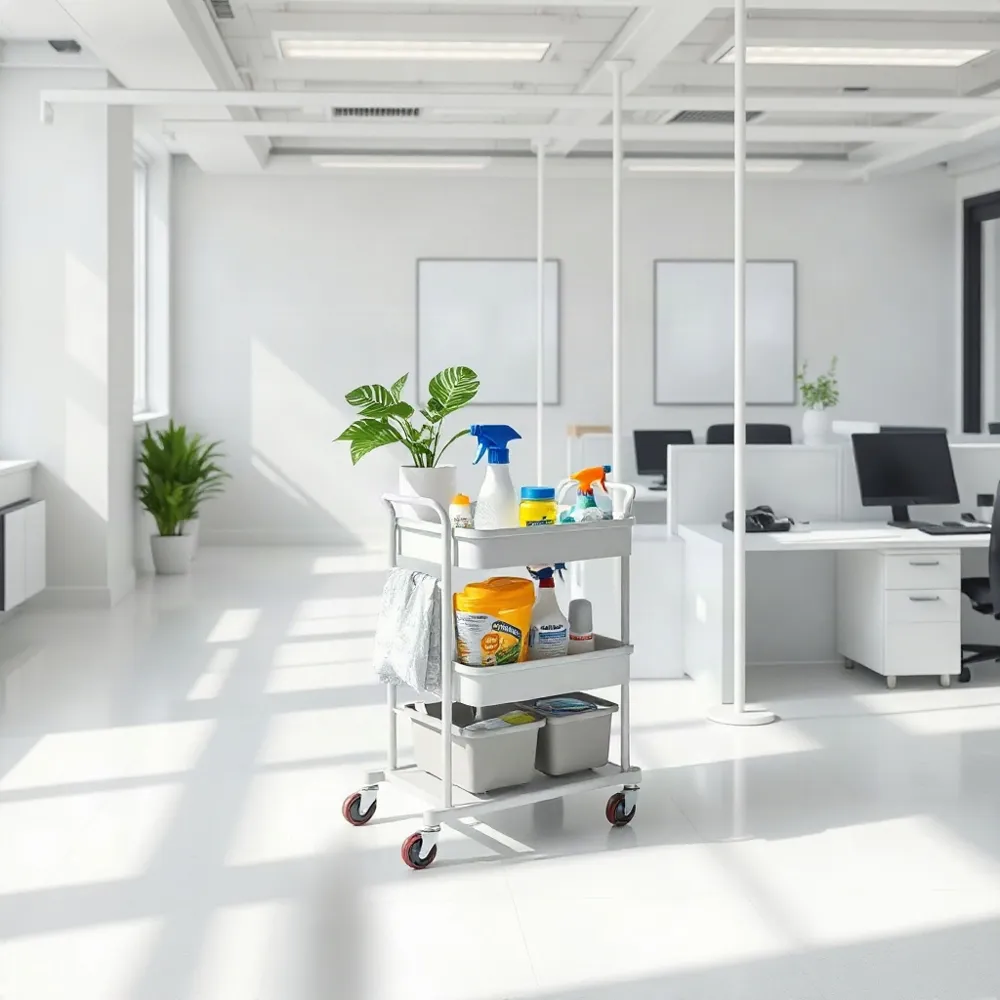
 Because these areas are contacted so frequently, the CDC and OSHA recommend regular cleaning and disinfection. A two‑step process—pre‑cleaning to remove visible soil with soap and water, followed by application of an EPA‑registered disinfectant at the label‑specified concentration and contact time (typically 1–10 minutes)—provides the best microbial reduction. Microfiber cloths or mop heads should be used, as they capture up to 99 % of microbes and allow uniform coverage, especially when combined with electrostatic sprayers for larger facilities.
Frequency guidelines vary by traffic level. High‑traffic zones (lobbies, restrooms, break rooms) should be cleaned at least twice daily, while shared items such as keyboards or printers may require wiping after each use. During outbreaks or when a sick individual has been present, immediate disinfection of all high‑touch points is essential.
Adhering to these practices reduces the spread of bacteria, viruses, and fungi, supports indoor‑air quality, and aligns with eco‑friendly cleaning standards that many property managers now demand.
Eco‑Friendly Cleaning Practices for Sustainable High‑Touch Hygiene
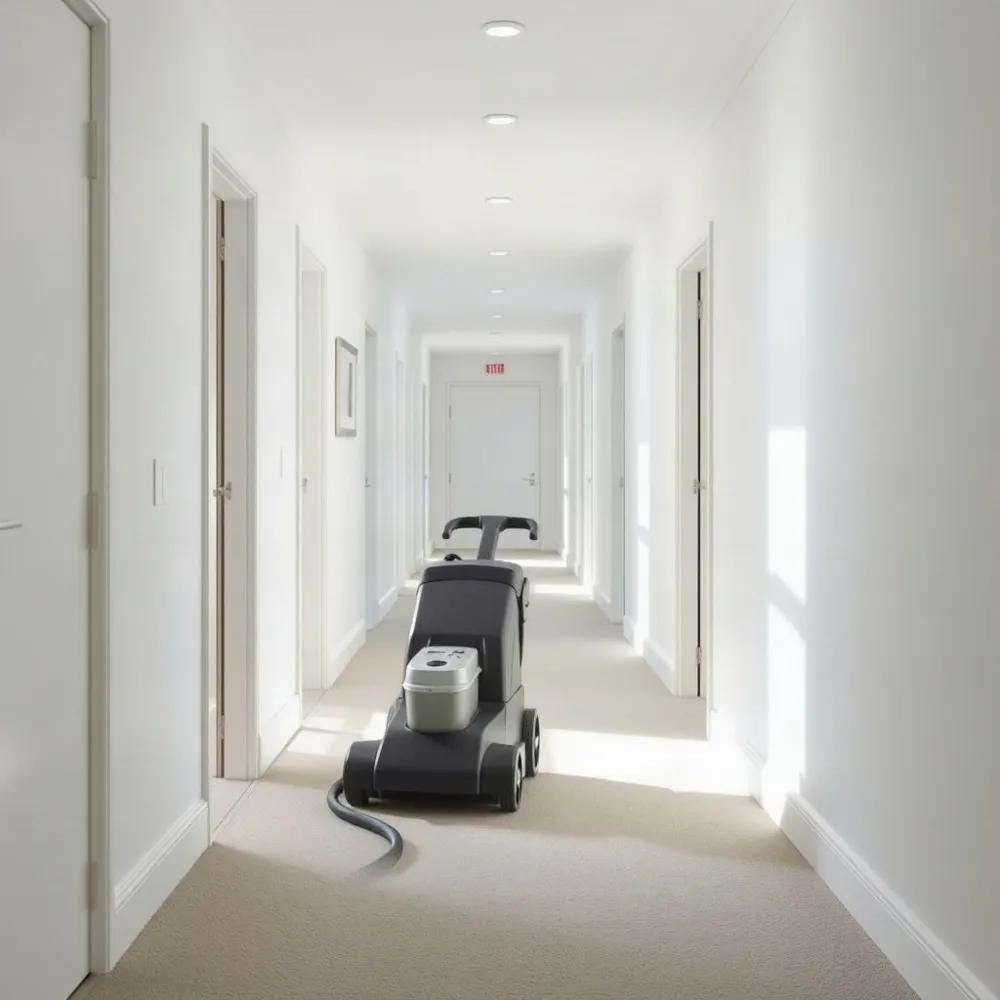
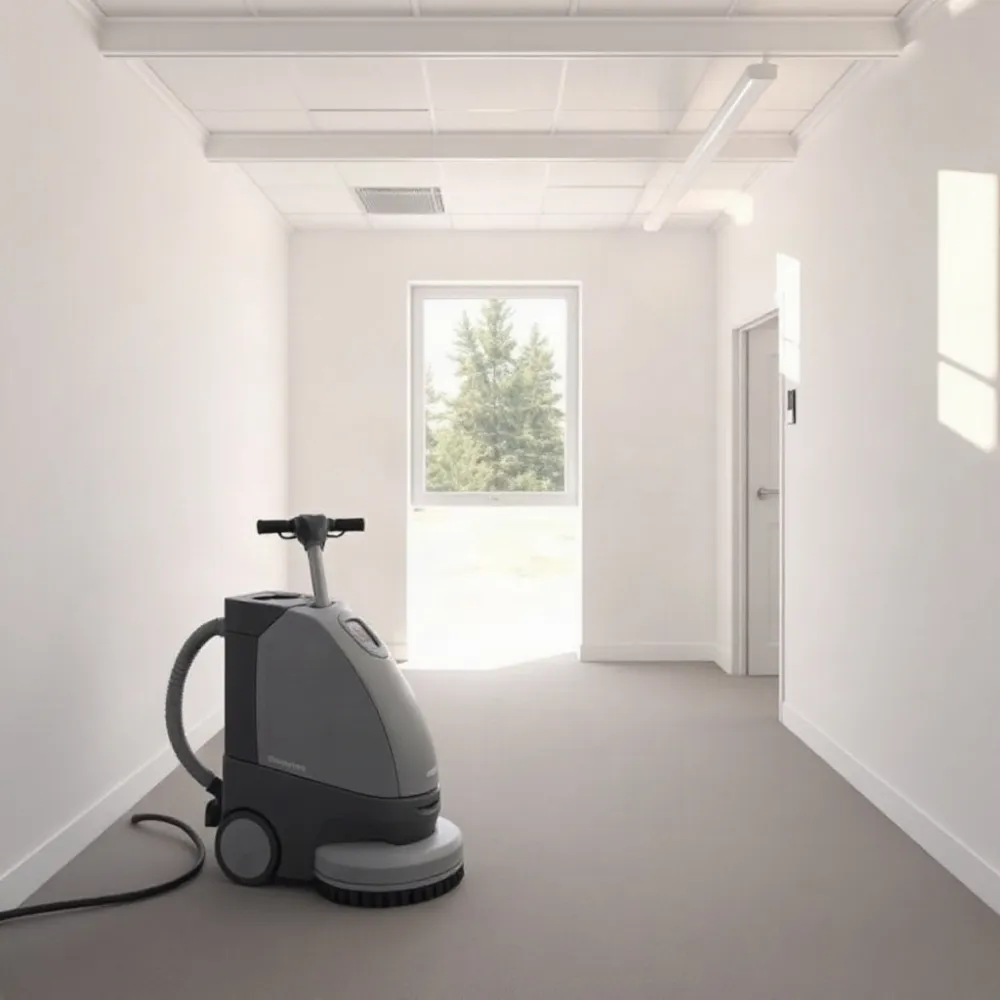
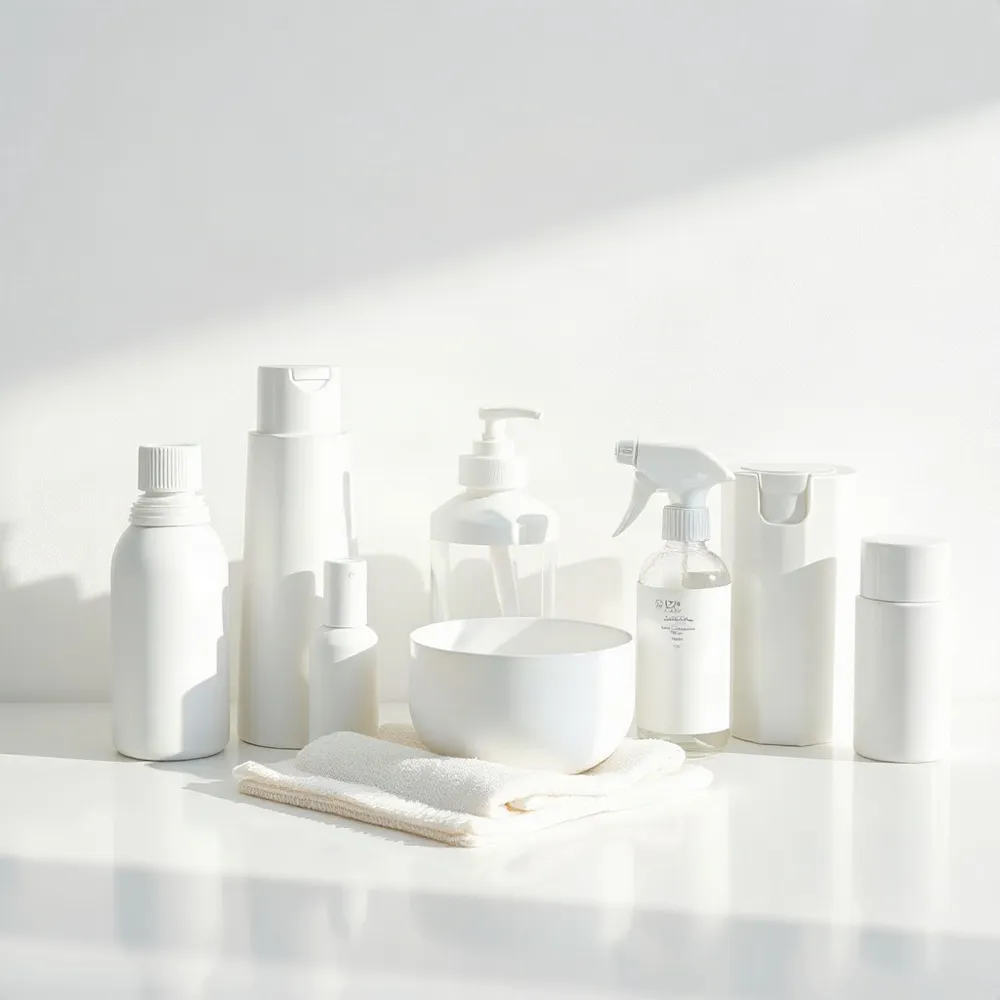
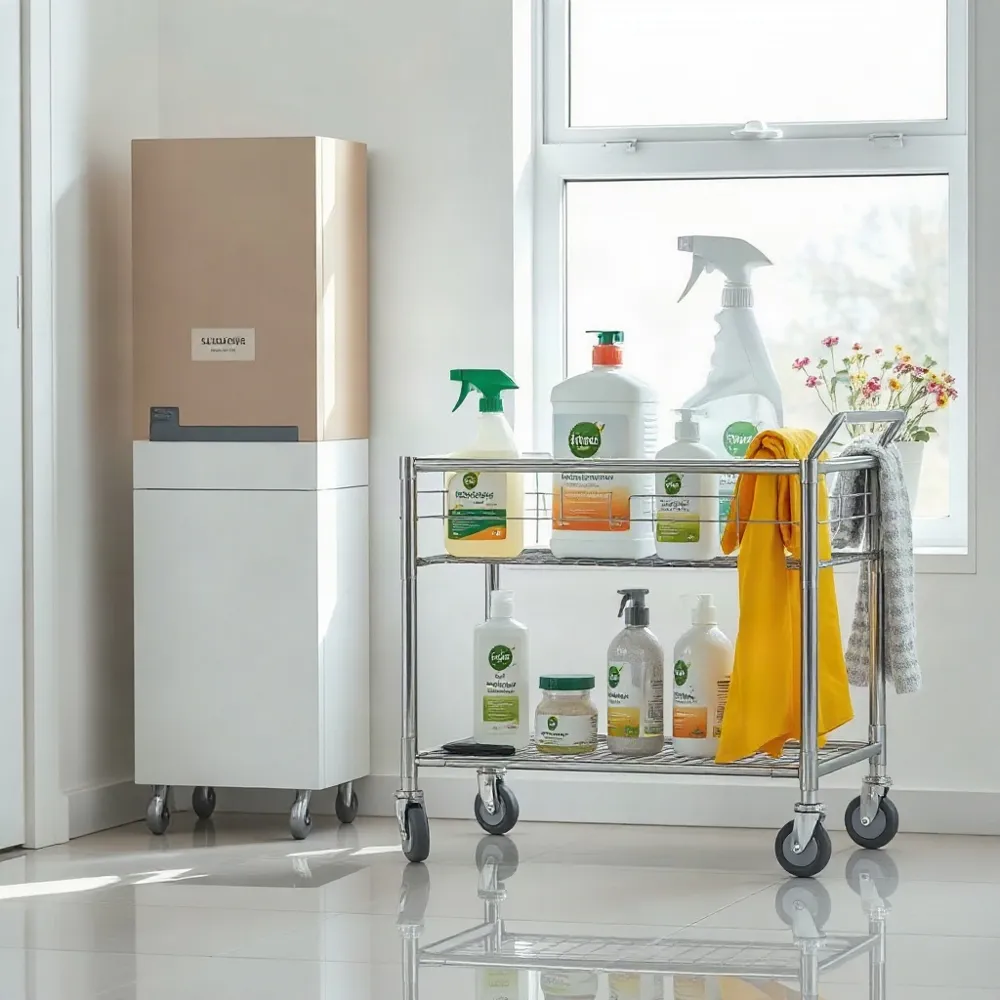
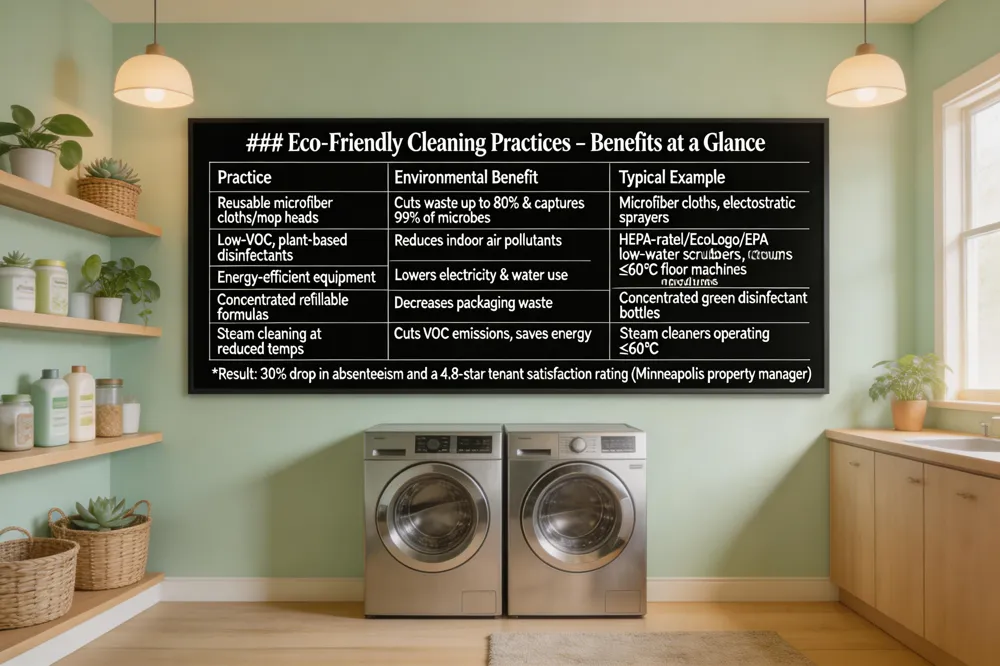 High‑touch surface hygiene is a cornerstone of a healthy workplace, and today eco‑friendly methods deliver the same microbial kill as traditional chemicals while protecting indoor air and the planet. Certified green products—bearing Green Seal, EcoLogo or EPA Safer Choice—are biodegradable, plant‑based and low‑VOC, meeting CDC disinfection standards for viruses, bacteria and fungi. Replacing disposable wipes with reusable microfiber cloths and mop heads cuts waste by up to 80 % and captures up to 99 % of microbes thanks to their fine fibers and electrostatic charge. Energy‑efficient tools such as HEPA‑rated vacuums, low‑water‑usage scrubbers and battery‑powered floor machines lower electricity and water consumption, and many models operate at ≤60 °C, further reducing VOC emissions. In 2022 many firms adopted concentrated refillable formulas, steam‑cleaning at reduced temperatures and Safer Choice‑certified disinfectants, achieving cost savings and a 30 % drop in absenteeism. “Bravo Cleaning’s green protocol” brought a 4.8‑star rating and tenant reports of fresher air,” says a Minneapolis property manager. The three Rs—Reduce, Reuse, Recycle—guide every step, from cutting chemical volumes to recycling packaging. A documented SOP includes checklists, dwell‑time verification and ATP testing, ensuring compliance while reinforcing eco‑friendly practices. For a customized high‑touch plan, call (713) 850‑0287.
Our Service Model: Staff, Contracts, and Expertise
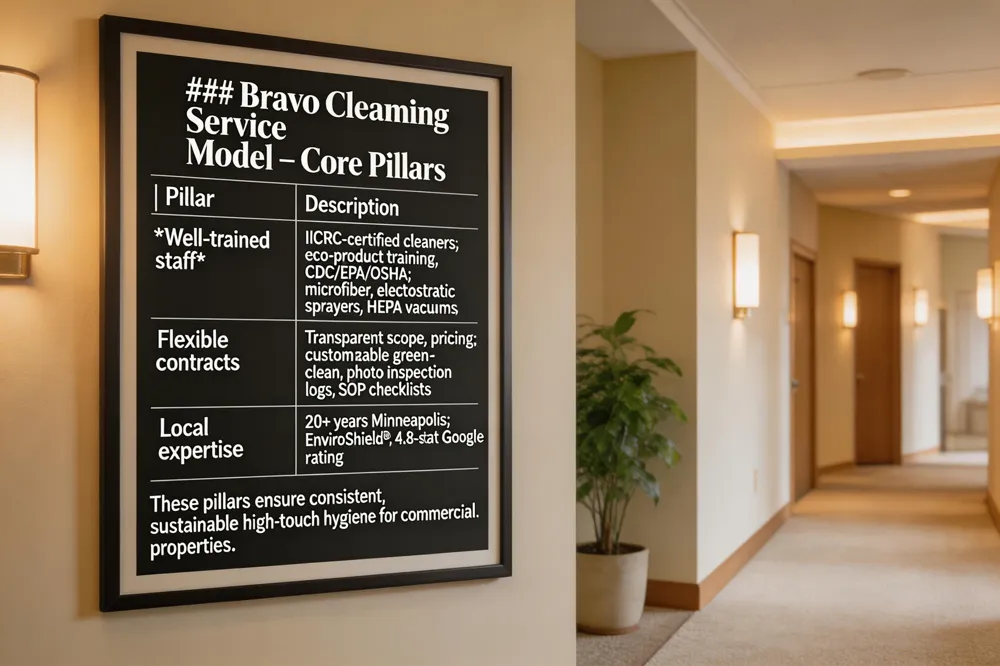 Bravo Cleaning’s service model is built on three pillars: well‑trained staff, flexible contracts, and deep local expertise.
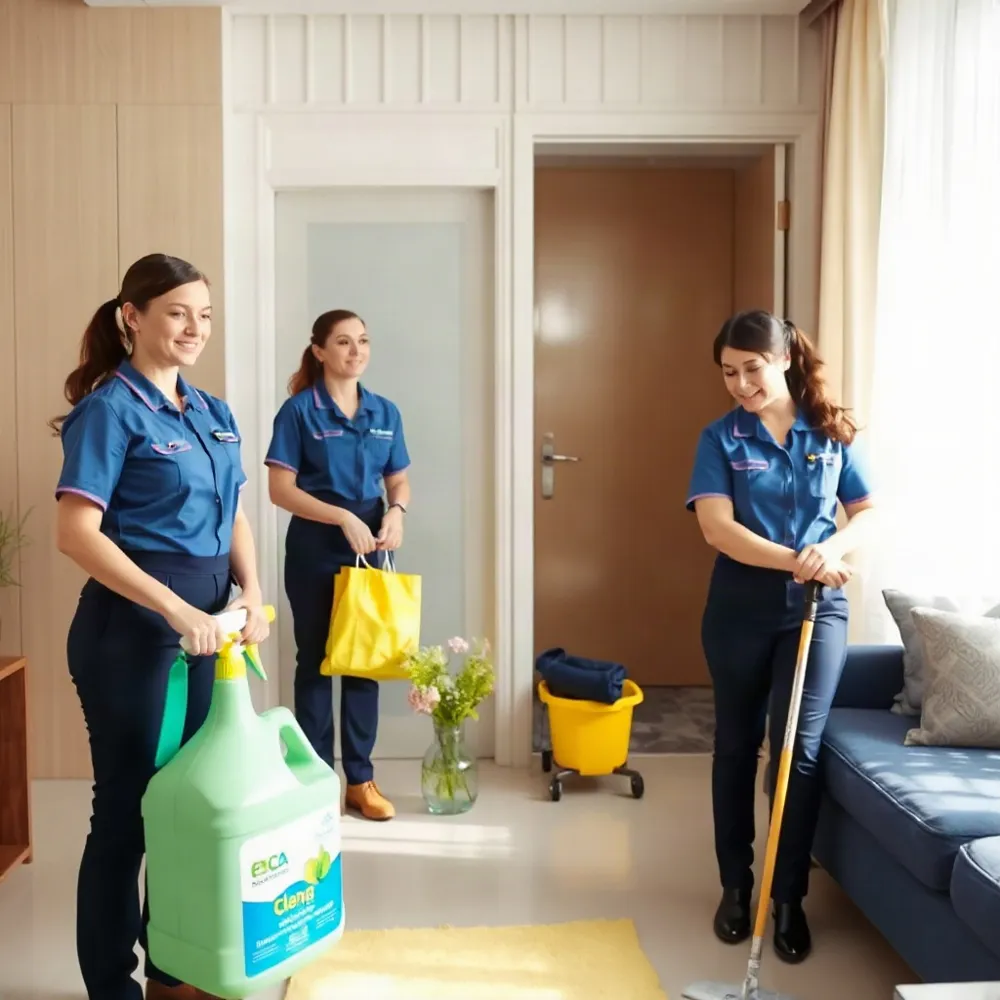
Hiring and training of cleaners – We regularly recruit reliable professionals for commercial cleaning jobs throughout the Minneapolis area. Every team member completes comprehensive training on eco‑friendly products, high‑traffic floor care, and detailed turnover cleaning for apartments, condos, office buildings, and retail spaces. Our staff are IICRC‑certified and receive ongoing instruction on CDC, EPA, and OSHA infection‑control guidelines, ensuring consistent high‑touch surface hygiene using microfiber cloths, electrostatic sprayers, and HEPA‑grade vacuums.
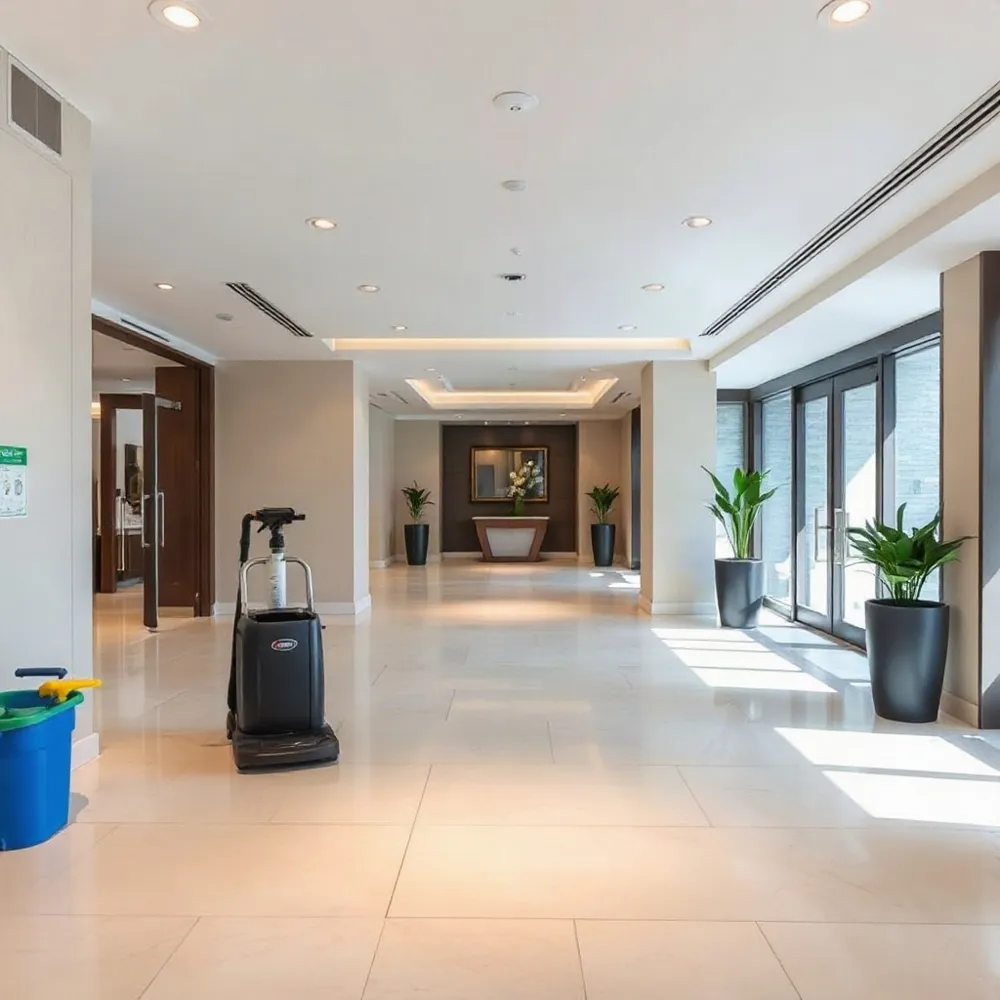
Customizable commercial contracts – Commercial cleaning contracts are transparent agreements that outline scope, frequency, performance standards, and pricing. Bravo Cleaning offers fully customizable contracts that incorporate green‑clean standards, documented cleaning schedules, and regular inspection logs with photographic verification. This flexibility lets property managers tailor services to office lobbies, multifamily turnover, or medical facilities while staying within budget.
Expertise of Bravo Cleaning’s team – With over 20 years of local experience, our experts bring meticulous care to every project. We combine advanced equipment with proprietary disinfectants like EnviroShield® and provide detailed reports that demonstrate compliance with CDC, OSHA, and local health codes. Clients consistently praise our reliability, thoroughness, and eco‑friendly approach, reflected in a 4.8‑star rating on Google reviews.
By integrating skilled staff, adaptable contracts, and proven expertise, Bravo Cleaning delivers high‑quality, sustainable commercial cleaning solutions that protect health and enhance property value.
Cost, Rates, and Value of Professional Cleaning
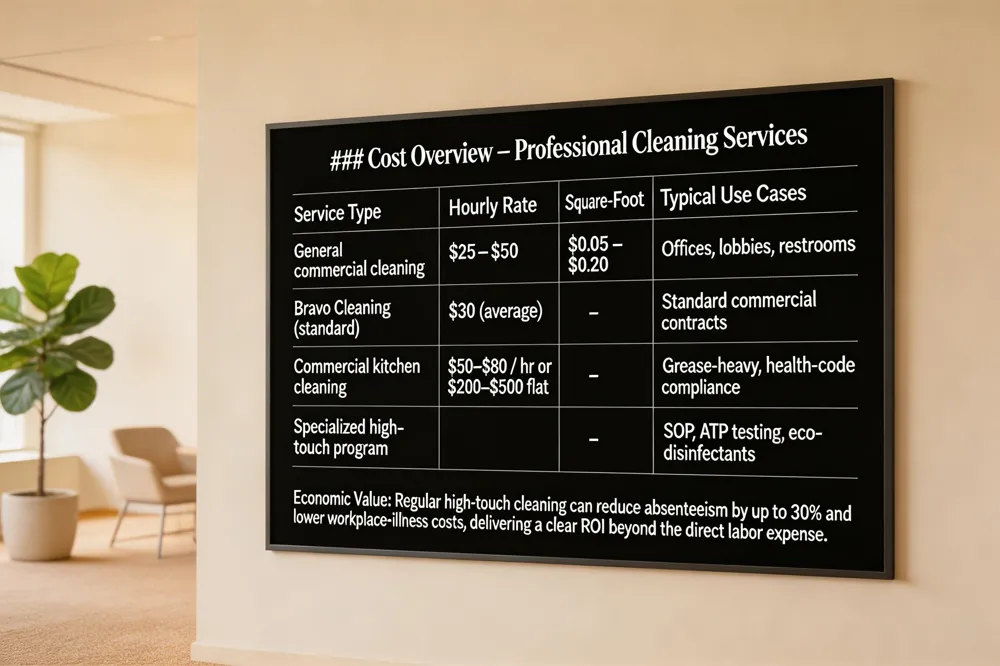 Professional commercial cleaning typically costs $25 to $50 per hour, or $0.05 to $0.20 per square foot, depending on facility size, layout, service type, frequency, and location. A rate of $30 per hour is solid—well above average house‑cleaner wages and comfortably within the $20‑$50 range for standard residential work. For a commercial kitchen, providers usually charge $50 to $80 per hour per cleaner or a flat‑rate of $200 to $500, reflecting equipment, grease buildup, and health‑code compliance. A three‑hour job therefore costs $75 to $135 at typical hourly rates. In Minneapolis, Bravo Cleaning—renowned for 20+ years of local expertise, eco‑friendly disinfectants, and customized schedules—offers competitive wages and flexible staffing for reliable commercial‑cleaning jobs, earning it the reputation as the city’s top provider.
Cleaning vs. Janitorial vs. Commercial Cleaning: Janitorial services cover routine day‑to‑day tasks (sweeping, trash removal). Cleaning is a broader term for everyday upkeep in homes or small offices. Commercial cleaning goes deeper, employing industrial‑grade equipment, EPA‑registered disinfectants, and high‑touch surface protocols to meet OSHA, CDC, and green‑building standards.
Regular high‑touch cleaning reduces absenteeism by up to 30 % and lowers workplace‑illness costs, delivering clear economic value alongside healthier indoor air quality.
Putting It All Together: A Proven High‑Touch Hygiene Program
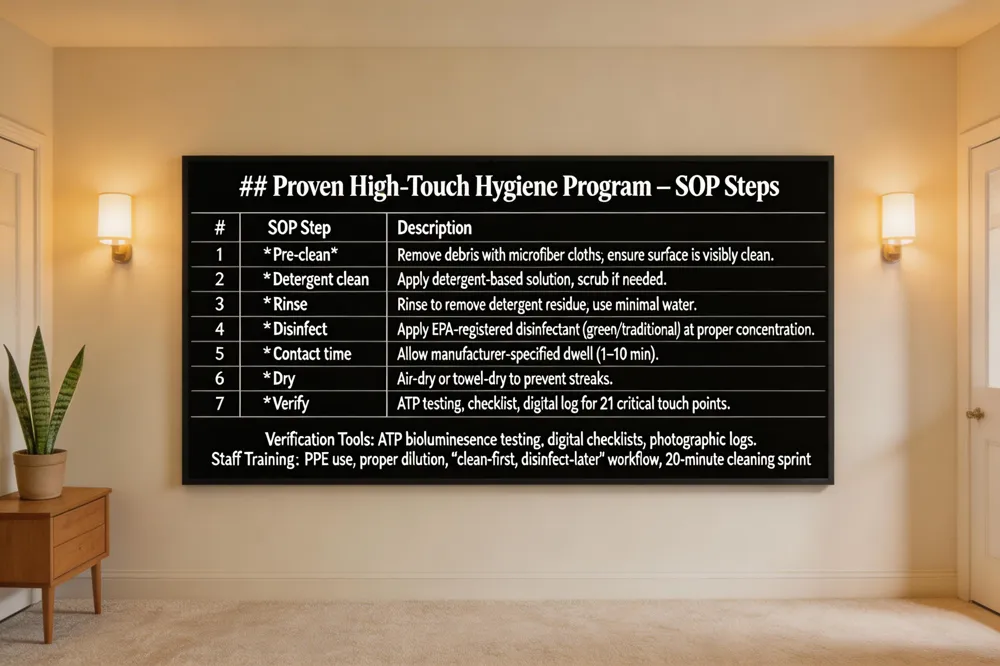 A robust high‑touch surface hygiene program begins with a clear step‑by‑step SOP: (1) pre‑clean to remove debris, (2) apply a detergent‑based clean, (3) rinse, (4) disinfect with an EPA‑registered product, (5) allow the manufacturer‑specified contact time (often 1‑10 minutes), and (6) air‑dry or towel‑dry. Microfiber cloths and electrostatic sprayers are used for uniform coverage, while eco‑friendly disinfectants—such as hydrogen‑peroxide‑based or plant‑derived quats—meet CDC efficacy standards and reduce VOC exposure. Verification combines ATP testing bioluminescence testing, color‑coded checklists, and digital logs to confirm that each of the 21 critical touch points (door handles, light switches, elevator buttons, restroom fixtures, etc.) has been treated within the required dwell time. Staff receive hands‑on training on PPE, proper dilution, and the “clean‑first, disinfect‑later” workflow, reinforcing the 20‑minute rule of cleaning (a focused 20‑minute cleaning sprint followed by a brief break to maintain productivity).
What is the 20‑minute rule of cleaning? It is a time‑boxing technique: set a timer for 20 focused minutes of cleaning, then take a 10‑minute break, helping tackle last‑minute clean‑ups efficiently without burnout.
Professional janitorial services managing high‑touch surface hygiene PDF – The PDF outlines the 8 Rules of Cleaning, PPE use, top‑to‑bottom workflows, the 21 critical touch points, disinfectant dwell times, SOPs, daily/terminal checklists, cloth‑replacement guidelines, and validation methods like ATP testing, all while reinforcing eco‑friendly practices.
Professional janitorial services managing high‑touch surface hygiene phone number – For a personalized quote or to schedule a service visit, call (713) 850‑0287 to discuss your high‑touch surface hygiene needs and set up a regular cleaning plan.
High‑touch surface hygiene nursing – Nursing staff must routinely disinfect high‑touch surfaces such as bed rails, bedside tables, IV poles, call lights and monitors. The CDC recommends cleaning these items at least every 12 hours and immediately after spills, using EPA‑approved disinfectants effective against bacteria, viruses and fungi.
High‑touch surface hygiene PDF – The PDF provides a quick‑reference guide that lists the most frequently contacted objects, specifies cleaning frequency, outlines proper EPA‑approved disinfectant use, emphasizes hand hygiene, and includes a checklist for staff verification.
Ensuring a Safer, Greener Future for Minneapolis Buildings
Professional high‑touch hygiene dramatically cuts pathogen transmission, protecting occupants and reducing absenteeism. Using EPA‑registered, low‑VOC disinfectants and microfiber tools, our teams achieve up to 99.9 % microbial reduction while meeting green‑clean standards that lower indoor air pollutants. The upfront investment in eco‑friendly products and electrostatic sprayers pays off: fewer sick days mean higher productivity, and reduced chemical waste translates into long‑term cost savings on supplies, disposal, and health‑related claims. Want a customized cleaning plan that fits your schedule and budget? Contact us today for a free, no‑obligation consultation and see how our 20‑year Minneapolis expertise can keep your property safe and sustainable.
Recent articles