Carpet Cleaning Frequency Guidelines for Multi‑Family Buildings

Why Carpet Maintenance Matters for Multi‑Family Properties
Carpets act as hidden air filters; dust, allergens, and pollutants accumulate in fibers and can degrade indoor air quality if not removed. The EPA does not issue a strict cleaning‑frequency mandate, but it recommends following carpet‑manufacturer guidelines and industry standards such as those set by the IICRC and CRI to protect occupant health. Regular professional cleaning—using eco‑friendly hot‑water extraction or low‑moisture encapsulation—reduces allergen loads, limits mold growth, extends carpet lifespan, and helps property managers meet warranty and compliance requirements while keeping residents satisfied.
Balancing Frequency and Over‑Cleaning
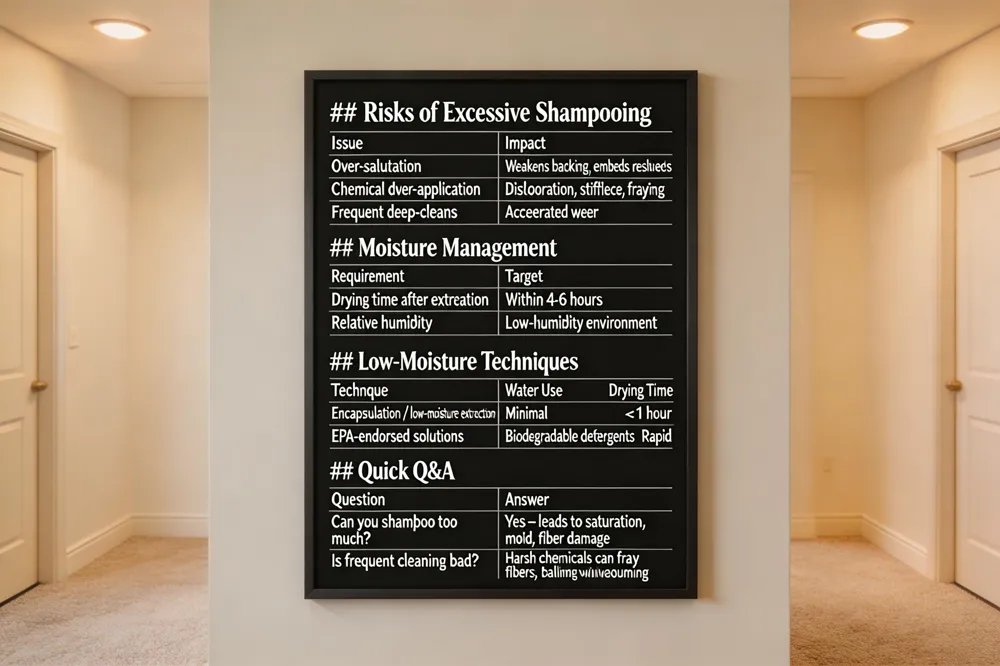 Maintaining carpet health in multi‑family and commercial settings requires a careful balance between regular upkeep and over‑cleaning. Risks of excessive shampooing – Too many deep‑clean cycles, especially with traditional shampoo that leaves fibers saturated, can weaken carpet backing, embed residues, and accelerate wear. Over‑application of chemicals may cause discoloration, stiffness, and premature fraying, reducing the carpet’s aesthetic life.
Moisture management and mold prevention – Prolonged moisture creates a breeding ground for mold, mildew, and odor‑producing bacteria. After any extraction, carpets must be dried within 4‑6 hours in low‑humidity environments; otherwise, hidden moisture can seep into padding and promote fungal growth, jeopardizing indoor air quality and tenant health.
Professional low‑moisture techniques – Modern low‑moisture or encapsulation methods use minimal water and biodegradable detergents, extracting soil while allowing rapid drying in under an hour. These eco‑friendly approaches meet EPA‑endorsed indoor‑air‑quality goals and protect carpet fibers from water‑related damage.
Q&A
Can you shampoo your carpet too much? Yes. Over‑shampooing saturates fibers, weakens backing, and invites mold. Use manufacturer‑approved schedules (typically annual for average traffic, more frequent for high‑traffic zones) and let trained technicians apply low‑moisture extraction.
Is it bad to clean carpets too often? Frequent deep cleans with harsh chemicals or excessive scrubbing can fray fibers, cause fading, and stiffen the pile. A routine of professional cleaning every 12‑18 months, supplemented by regular vacuuming and spot‑treatment, preserves carpet longevity while maintaining a healthy indoor environment.
Standard Professional Cleaning Intervals
 Intervals
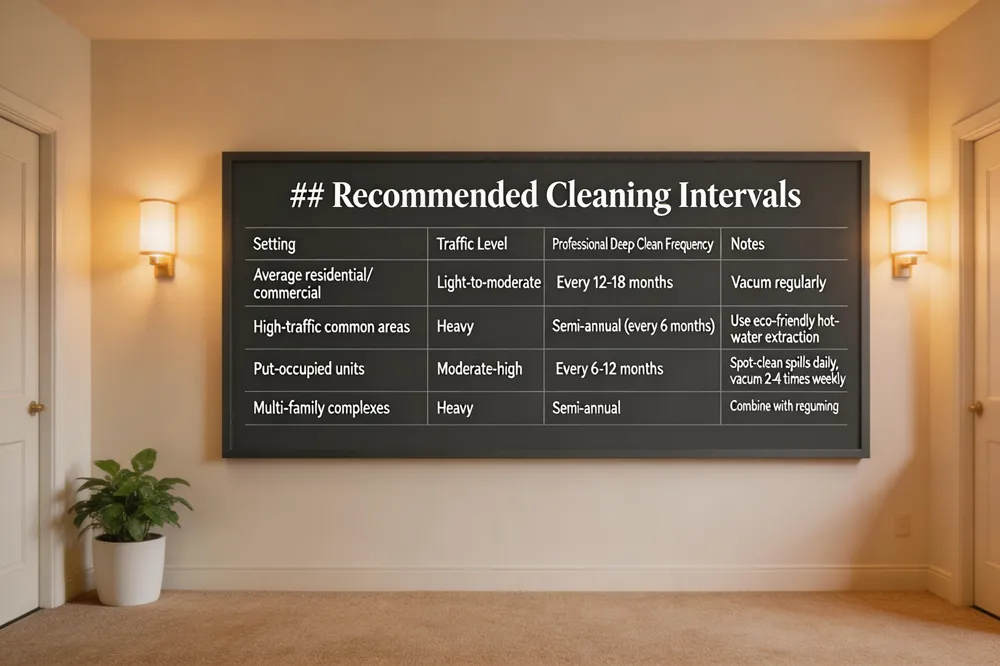
How often should carpets be cleaned professionally? A professional deep‑clean every 12‑18 months works for average use. If foot traffic, pets, children, or smoking are present, schedule cleanings twice a year or more often. Common‑area carpets in multi‑family buildings usually require semi‑annual service. Regular vacuuming between visits extends the interval. Bravo Cleaning tailors each plan, using eco‑friendly hot‑water extraction that protects carpets and the environment.
How often should you shampoo carpets if you have pets? Pet owners should aim for a professional shampoo at least twice a year; many experts suggest every 3‑6 months for a single pet and every 2‑3 months for multiple or heavy‑shedding animals. Light‑impact homes can stretch to 6‑12 months. Between shampoos, vacuum 2‑4 times weekly and spot‑clean spills immediately. Pet‑safe detergents safeguard both animals and residents while keeping odors and allergens under control.
Special Cases: Hotels, Schools, and Multi‑Family Common Areas
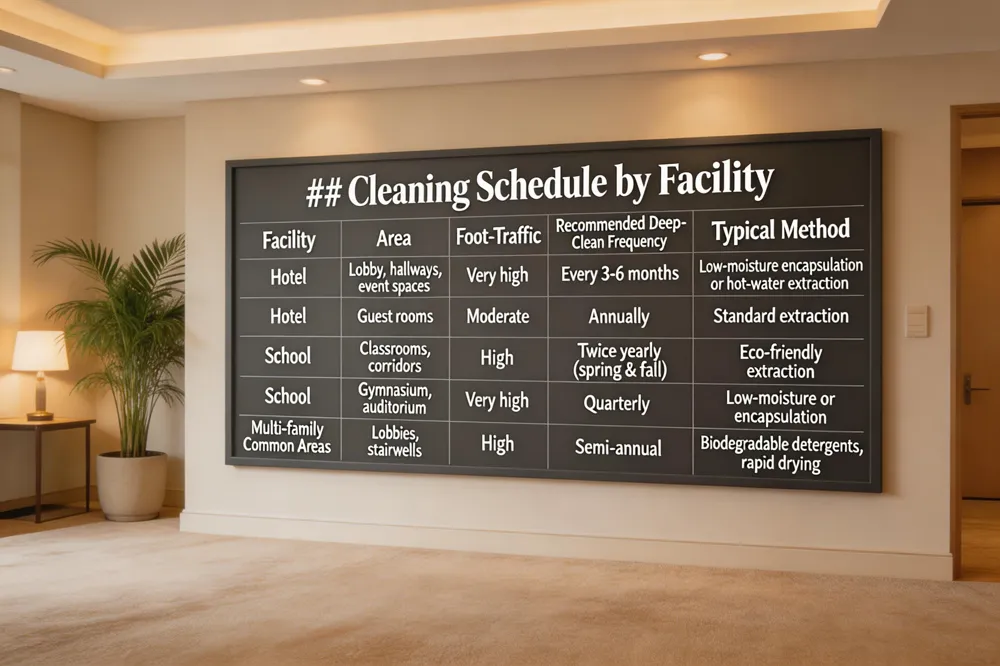 Foot‑traffic driven schedules are the linchpin of any carpet‑care program in high‑use settings. In hotels, lobbies, hallways, and event spaces see the greatest volume of guests and therefore require deep cleaning every 3‑6 months, while guest‑room carpets—exposed to lower traffic—can be serviced annually. Schools follow a similar logic: classrooms and corridors are vacuumed weekly and deep‑cleaned twice a year (typically in spring and fall), whereas gymnasiums or auditorium flooring, which endure heavy activity, merit quarterly cleaning.
Carpet‑type matters because durable nylon or wool fibers lose pile height faster under constant abrasion, prompting more frequent hot‑water extraction or low‑moisture encapsulation. Low‑pile synthetics such as polyester tolerate longer intervals (up to 12 months) before a deep clean is needed.
Turnover, events, and environmental considerations shape the calendar. Hotel guest turnover and large functions trigger spot‑treatments and a full extraction between stays. In multi‑family complexes, unit turnover cleaning is scheduled after each vacancy, while common‑area carpets are cleaned semi‑annually to reset indoor‑air quality. Eco‑friendly, biodegradable detergents and low‑volume water extraction are preferred to meet sustainability goals and reduce resident exposure to chemicals.
What factors determine the cleaning schedule for carpeted areas in a hotel? The schedule hinges on foot‑traffic volume, carpet fiber durability, guest turnover, and event timing, balanced against budget and green‑cleaning policies.
What is a good carpet cleaning schedule for condos? Professional deep‑cleaning of unit carpets once a year (early spring), quarterly vacuuming/spot‑cleaning, and bi‑annual deep cleaning of lobby, hallway, and stairwell carpets (spring and fall) provide optimal appearance, lifespan, and indoor‑air quality.
Turnover, Replacement Planning, and Longevity
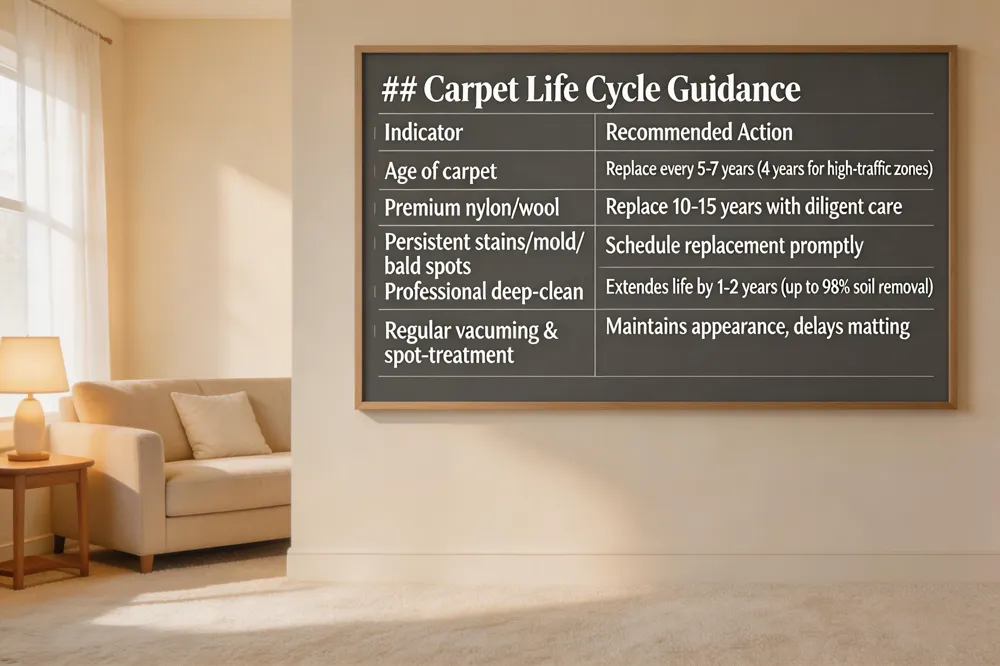 Carpet replacement cycles for rentals are typically 5‑7 years for standard units, but high‑traffic zones such as hallways, entryways, and families with children benefit from a shorter 4‑year interval. Landlords who follow the Carpet and Rug Institute’s guidance and incorporate regular professional cleaning—preferably hot‑water extraction with low‑VOC, biodegradable solutions—can often extend a carpet’s useful life by 1‑2 years.
Professional cleaning not only removes up to 98 % of embedded dust, allergens, and soil but also preserves fiber integrity, delaying the onset of matting, thinning, and permanent discoloration. When a carpet shows persistent stains, water damage, mold, bald spots, or a noticeable loss of softness, it signals that replacement is the most cost‑effective choice to protect indoor air quality and tenant health.
In apartment settings, the same 5‑7 year benchmark applies, with premium nylon or wool fibers lasting 10‑15 years under diligent care. Regular vacuuming, spot‑treating spills immediately, and scheduling deep cleans every 6‑12 months—even quarterly in pet‑friendly or high‑traffic buildings—helps maintain appearance and performance.
Monitoring these indicators and planning replacements ahead of time ensures a fresh, healthy living environment, minimizes emergency repairs, and preserves property value for owners and managers alike.
Practical Daily Practices and Eco‑Friendly Methods
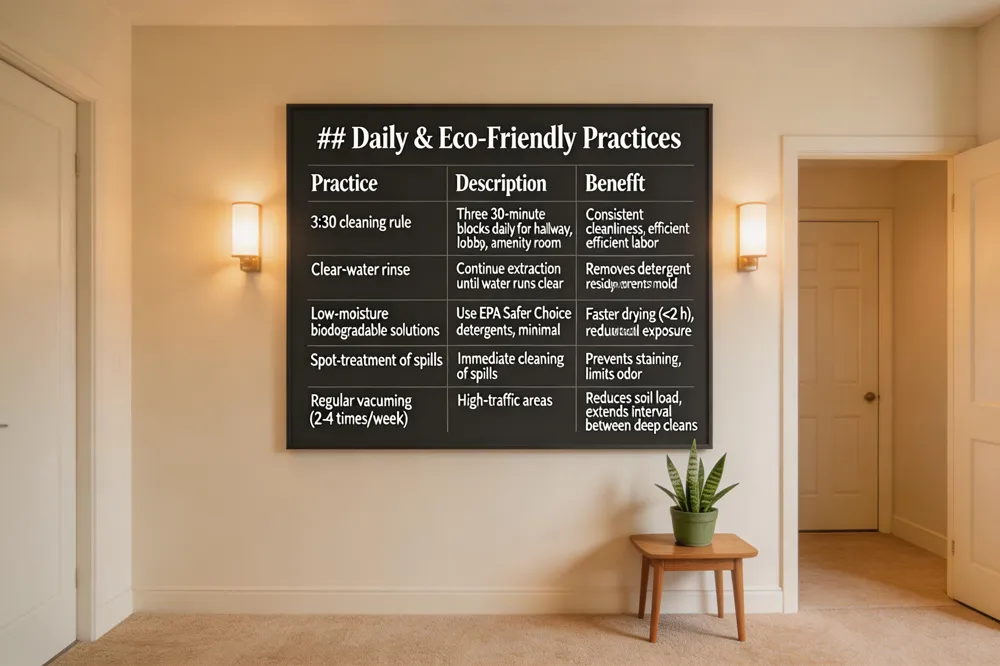 Property managers and business owners can keep carpet performance high between professional visits by adopting simple daily habits and eco‑friendly cleaning techniques.
30 is the 3:30 cleaning rule?
The 3:30 rule breaks housework into three focused 30‑minute blocks each day—one for a high‑traffic hallway, one for a lobby entryway, and one for a shared amenity room. By timing the task and stopping when the timer rings, staff create a sense of urgency, prevent endless chores, and maintain a consistently tidy environment. This approach dovetails with Bravo Cleaning’s customized, low‑impact services, ensuring that a clean, fresh appearance is sustained without overwhelming workloads.
Do you keep cleaning carpet until the water is clear?
Yes. During hot‑water extraction, continue the rinse cycle until the extracted water runs clear. Clear water confirms that detergent residues and loosened soil have been fully flushed out, reducing sticky films, preventing mold growth, and preserving carpet fiber integrity.
Clear‑water rinse technique in extraction
A clear‑water rinse removes cleaning‑solution buildup, leaving fibers clean and ready for rapid drying.
Low‑moisture and biodegradable cleaning solutions
Eco‑friendly, biodegradable detergents paired with low‑moisture extraction reduce drying time to under two hours, lower water usage, and meet Green Seal or EPA Safer Choice standards—ideal for multi‑family turnover and high‑traffic commercial zones. These practices extend carpet life, protect indoor air quality, and align with sustainability goals.
Maintaining Healthy Carpets in Multi‑Family Buildings
Property managers should design tailored cleaning schedules that match foot‑traffic patterns, pet occupancy, and allergy concerns. By using IICRC‑approved hot‑water extraction with biodegradable, low‑VOC detergents, Bravo Cleaning reduces chemical exposure while removing up to 98 % of embedded soil. Seasonal deep cleans every 6‑12 months in high‑traffic corridors and quarterly spot‑treatments in low‑traffic zones keep indoor air quality high and prevent premature fiber wear. This proactive approach extends carpet life 20‑30 %, cutting replacement costs and delivering measurable long‑term savings for owners.
Recent articles